
This off the beaten path reminds me of so much of good memories from a boy to a men and marriage ,and fatherhood. It is impossible for me to tell you otherwise, Madrid is it for many reasons already mentioned in my blog, Again found me a picture in my cd rom vault that should be in my blog for you and me, Therefore, let me tell you on the Palacio de Santoña of Madrid !!! Hope you enjoy the post as I.
The Palacio de Santoña or Palace of the Dukes of Santoña ,formerly Goyeneche Palace, is located on the corner of Calle Huertas and Calle Príncipe. It dates back to the 16C and was later renovated in the 18C and 19C. The exterior of the building displays the typical features of 18C palaces in Madrid. When the Dukes of Santoña acquired the palace in the 19C, they adapted it to the tastes of the time, incorporating exotic decoration with oriental influences, which has been preserved to this day. The walls of its rooms feature paintings alluding to commerce and industry, interspersed with others related to the Fine Arts. The palace rooms worth seeing for their artistic value are Salón de Fiestas or Festival Hall ; this room includes several paintings depicting the origin of Santoña’s title and an allegory of the four seasons. The Salón Pompeyano or Pompeian Hall;named after the style of decoration it features. The paintings on the ceiling and in the medallions, whose themes include allegories of the visual arts and portraits of Renaissance artists, are striking. The Rotunda ; the contrasting colors of the marbles, as well as the paintings that decorate it, are striking.
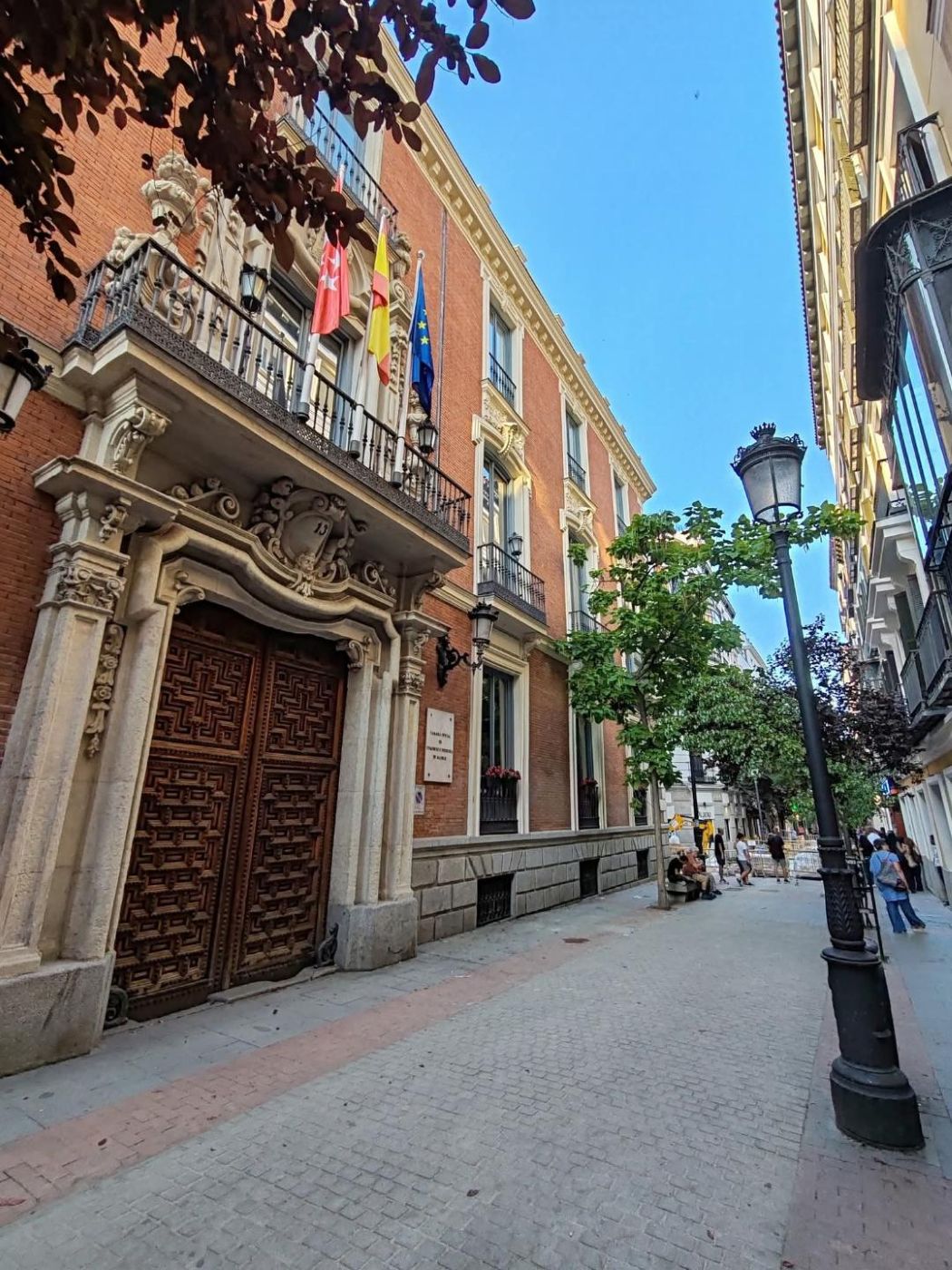
A bit of history I like tell us that by the 16C, a palace already existed on the site, and by 1576 it was owned by the Marquises of Fresneda and the Viscounts of Fresno. In 1593, it gained some significance as it served for some time as the residence of the Prince of Morocco, Muley Xeque, known as the Black Prince and who after being baptised was called Philip of Africa. In 1731, the old mansion was acquired by the politician and banker Juan Francisco de Goyeneche, Marquis of Ugena. The Churriguera Baroque style of the family was continued in the refurbishment of the newly acquired palace. The façade on Calle Huertas , carved in granite, is a genuine example of Ribera’s style. After the Marquis of Ugena died in 1744, his widow, María de la Cruz Acedo, continued to live in the palace until her death. After the War of Independence, it was once again inhabited by the Counts of Saceda, members of the powerful Goyeneche family, until 1874. That year it was acquired by Don Juan Manuel de Manzanedo, Marquis of Manzanedo and Duke of Santoña, from whom it takes its current name. Under the magnificence of the Dukes of Santoña, the palace acquired the status of one of the most representative palaces of the 19C. The property was sold on June 6, 1933, to the Chamber of Commerce and Industry of Madrid, its current owner and of which it was the headquarters until 2003. Now a branch.
The heritage site of the City of Madrid on the Palacio de Santoña : http://monumentamadrid.es/AM_Edificios4/AM_Edificios4_WEB/index.htm#ingra:inmana.04093
The official Camara de Comercio de Madrid (Chamber of Commerce) on the Palacio de Santoña : https://www.palaciosantona.es/alquiler-espacios-eventos-madrid/
The Madrid tourist office on the Palacio de Santoña : https://www.esmadrid.com/en/tourist-information/palace-santona-camara-comercio
There you go folks, the enormous memorable sentimental , my dear Madrid. This is as said an off the beaten path site but worth the detour, me think, Again, hope you enjoy the post on the Palacio de Santoña of Madrid !!! as I
And remember, happy travels, good health, and many cheers to all !!!

 Paris1972-Versailles2003