
Well of course from birth I was taught and made remember the plays of a giant of Spanish literature ,playwriter, and a poet that wasFélix Lope de Vega Carpio, better known as Lope de Vega. And is in my whimsical Barrio de las Letras (see post) neighborhood in my beloved Madrid! I took my boys on an educational visit for the roots of it all! I found me new pictures in my cd rom vault that should be in my blog for you and me, Therefore, let me give you my take on the Convento de las Trinitarias Descalzas of Madrid !!! Hope you enjoy the post as I.
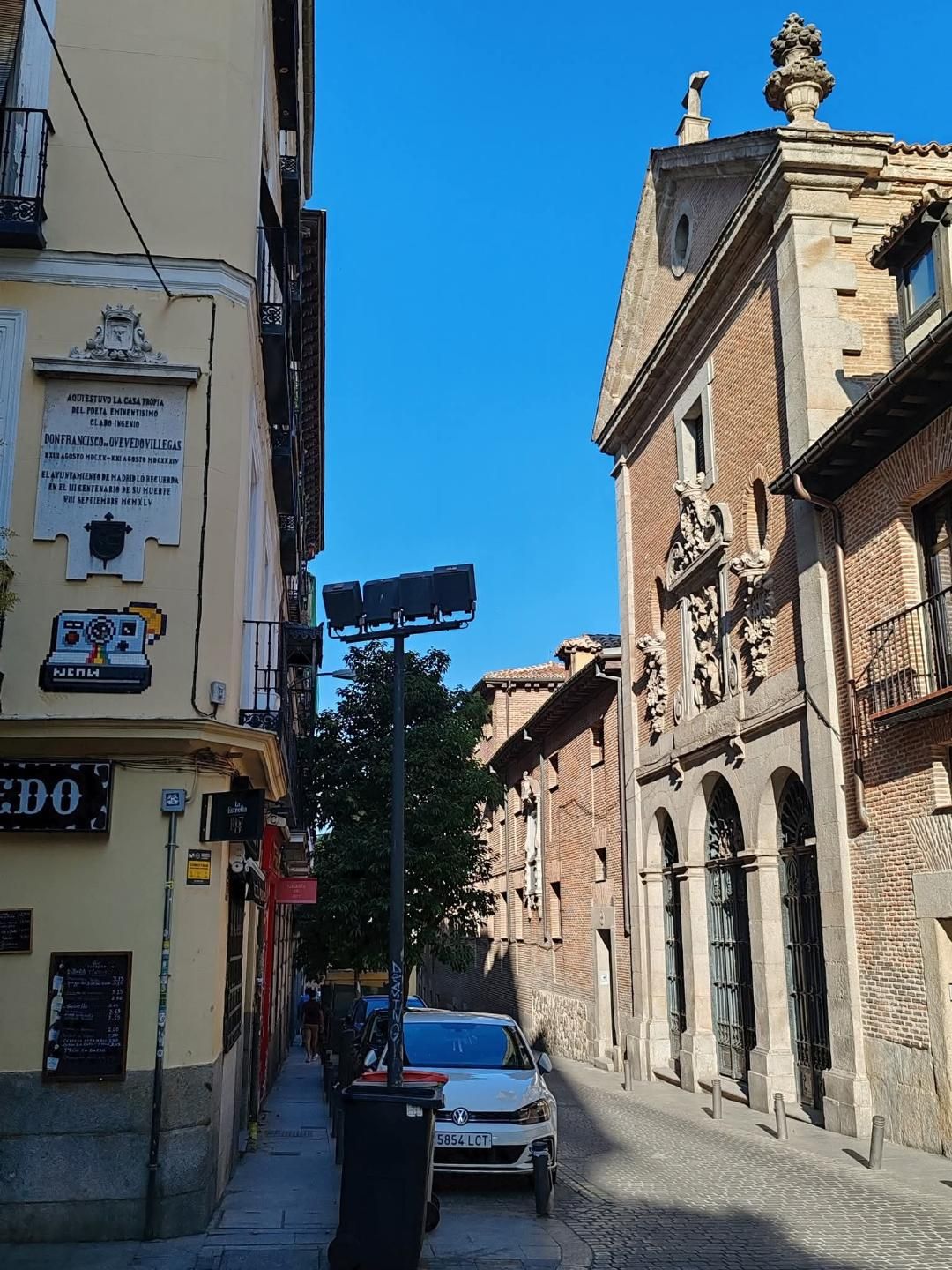
The Calle Lope de Vega is located in the Barrio de Las Letras or Literary Quarter of Madrid. It runs down from Calle de León to Paseo del Prado, near the Velázquez Gate of the Prado Museum. It was formerly called Calle de Cantarranas. The origin of its ancient and curious name appears to be the large puddles formed by the orchards of the old monastery of San Jerónimo el Real in the lower part of the street. The street’s name was changed in 1835 to that of the literary master of Spanish theatre Lope de Vega.
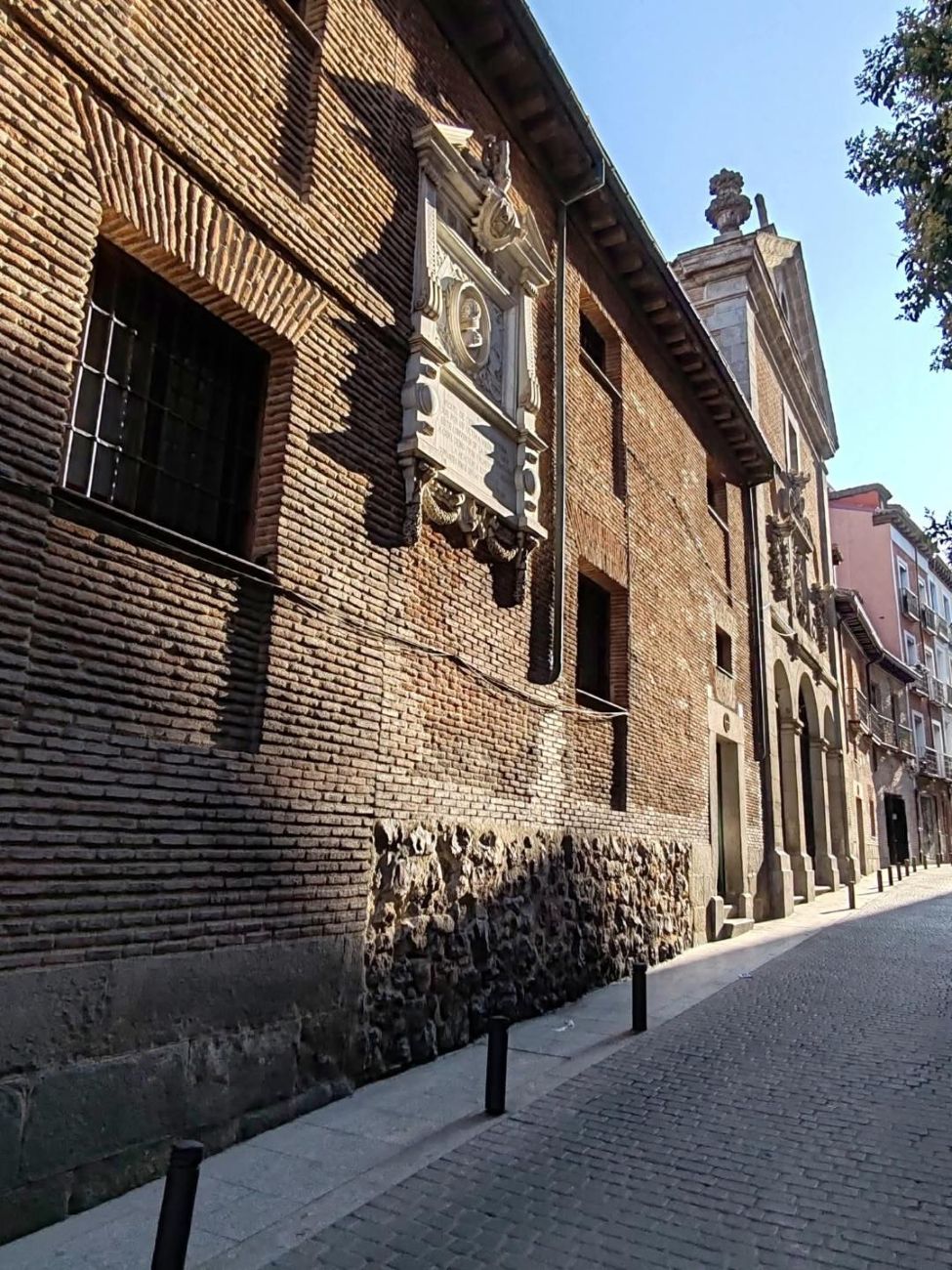
At no, 18, you will find the still-known as the Convento de las Trinitarias Descalzas or Trinitarian Convent, The Monastery of San Ildefonso y San Juan de Mata, aka Convent de las Trinitarias Descalzas has as the church built between 1668 and 1698. The convent was built between 1718 and 1752. It was initially founded in 1612 around a modest church, where the writer Miguel de Cervantes was buried in 1616. This church was demolished and the current Baroque temple was built in 1668. Work on the convent began in 1718. The small church has a Latin cross plan with a single nave. Inside, a large Baroque altarpiece is preserved. The convent also has a courtyard, cloister and cells. The complex was renovated in later years but has always maintained its sober façade. The church preserves a large Baroque altarpiece that narrates the miraculous chasuble imposed by the Virgin Mary on Saint Ildefonso of Toledo in the 7C. Since 2015, after the remains of Miguel de Cervantes were found, they rest in a monument erected in his honor inside the church, which can be visited. Founded at the beginning of the 17C, by Lady Francisca Gaitán Romero, daughter of Julián Romero, captain of the armies of Felipe (Philip) II in the wars with Flanders. Coming from the convent of Santa Úrsula in Toledo, the congregation of Trinitarians that in 1612 occupied the properties that the Romero had on calle de Cantarranas, had been provisionally installed on Calle Mayor. It is known that it was this convent that paid the ransom for Cervantes, who was captive in Algiers, and that is why, after his death in 1616, he was buried there.In the cloister, a natural daughter of Cervantes lived, and from 1621 onwards, Sister Marcela de San Félix, before taking her vows, Marcela del Campo, Lope’s own daughter like him a “woman of verses” (a codex with poetry “à lo divino” is still preserved in the convent library). The detour that the funeral procession of the Fénix de los Ingenios or Phoenix of the Sugar Mills had to take to pass in front of the Trinitarians so that his daughter could say her last goodbye from a window on August 28, 1635. Some of the furniture currently on display at the Lope de Vega House-Museum (see post) comes from this convent.
Among its distinguished neighbors it is worth mentioning the comedian Juan Rana (Cosme Pérez), who although born in a town in the province of Valladolid, lived most of his life in what was Cantarranas Street, dying on April 20, 1672. In 1868, one of his heirs in the 19th century show business, Julián Romea Yanguas, a theater actor and writer also died in a house on this street. Also, at number 45, almost at the end of the street, Agustín Argüelles, president of the Cortes in 1841 and tutor of Isabel II after having been “the Divine” for his oratory during the Cortes of Cádiz, died on March 23, 1844. Other political and diplomatic neighbors who reached the limits of their old age in that same building on this street were Martín de los Heros and Ramón Gil de la Cuadra.
The Madrid tourist office on the convento de la Trinitarias Descalzas : https://www.esmadrid.com/en/tourist-information/iglesia-y-convento-de-las-trinitarias-descalzas
The City heritage monuments site on the Convento de la Trinitarias Descalzas : http://monumentamadrid.es/AM_Edificios4/AM_Edificios4_WEB/index.htm#ingra:inmana.04281
There you go folks, if you want to know about Spanish literature , playwriters and dwell on the history of Spain, then by all means stop by this historical monument of Spain , Americas, and the world. Again, hope you enjoy on the Convento de las Trinitarias Descalzas of Madrid !!! as I.
And remember, happy travels, good health, and many cheers to all !!!

 Paris1972-Versailles2003