
We were back to my dear Spain again !! love it !! We came by car of course and took time to see new areas and old repeat with some of them as introduction to my sons and our dog Rex ! I rented a small house in a off the beaten path country town that was just perfect ! I like to continue the saga of our new road warrior experiences even if now with less in our family, This post is on my latest road warrior tour of wonderful sublime Spain. Therefore, let me tell you about the Catedral del Salvador of Ávila !!! Hope you enjoy the post as I.
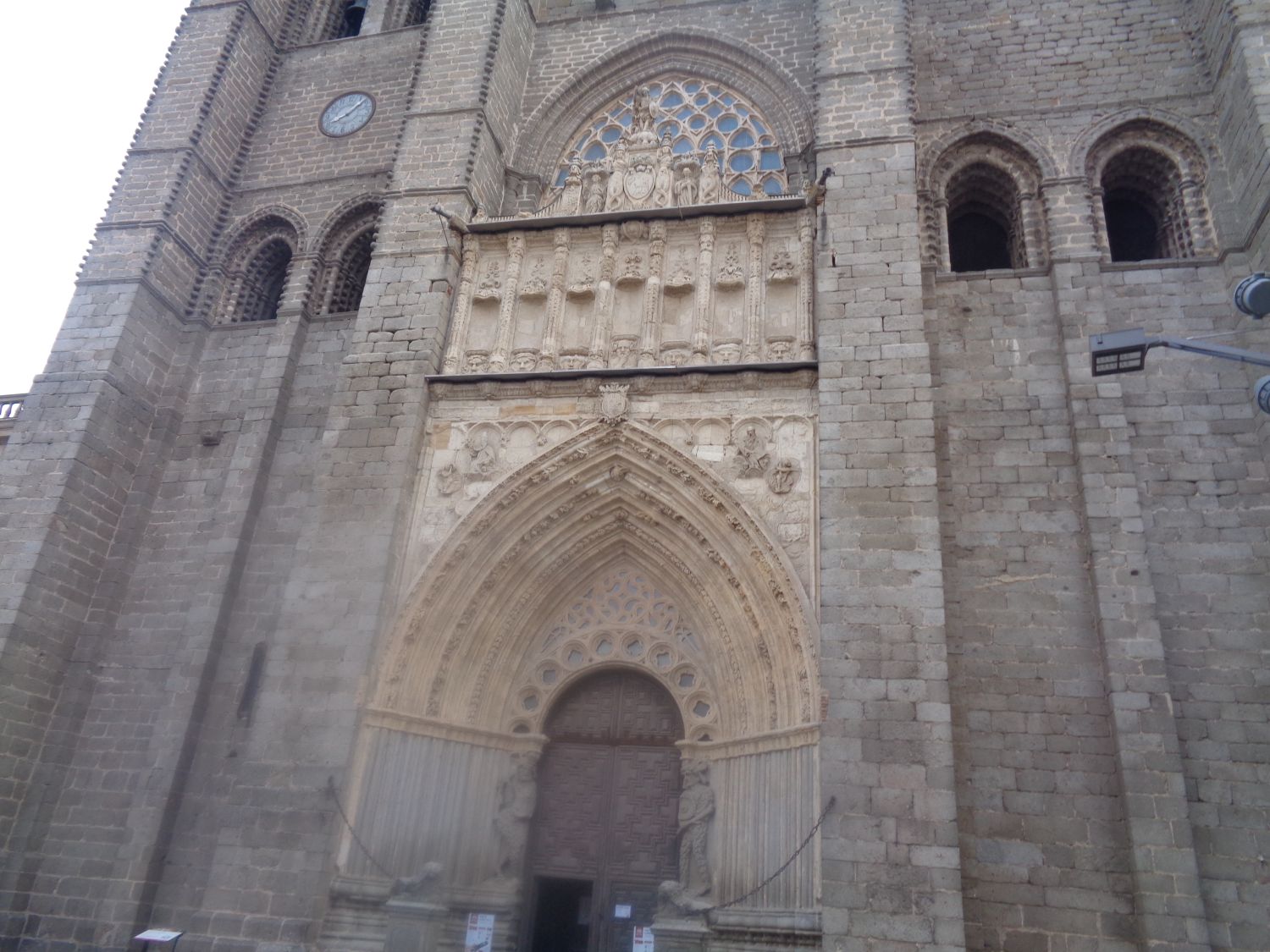
The City of Ávila is the capital of the province of Avila in the Autonomous Community of Castilla y León in the kingdom of Spain. It is located 105 km from Salamanca, 70 km from Segovia, 115 km from Madrid, and 126 km from our house rental in Velliza, All on the A62, A6 and N403 to City center.
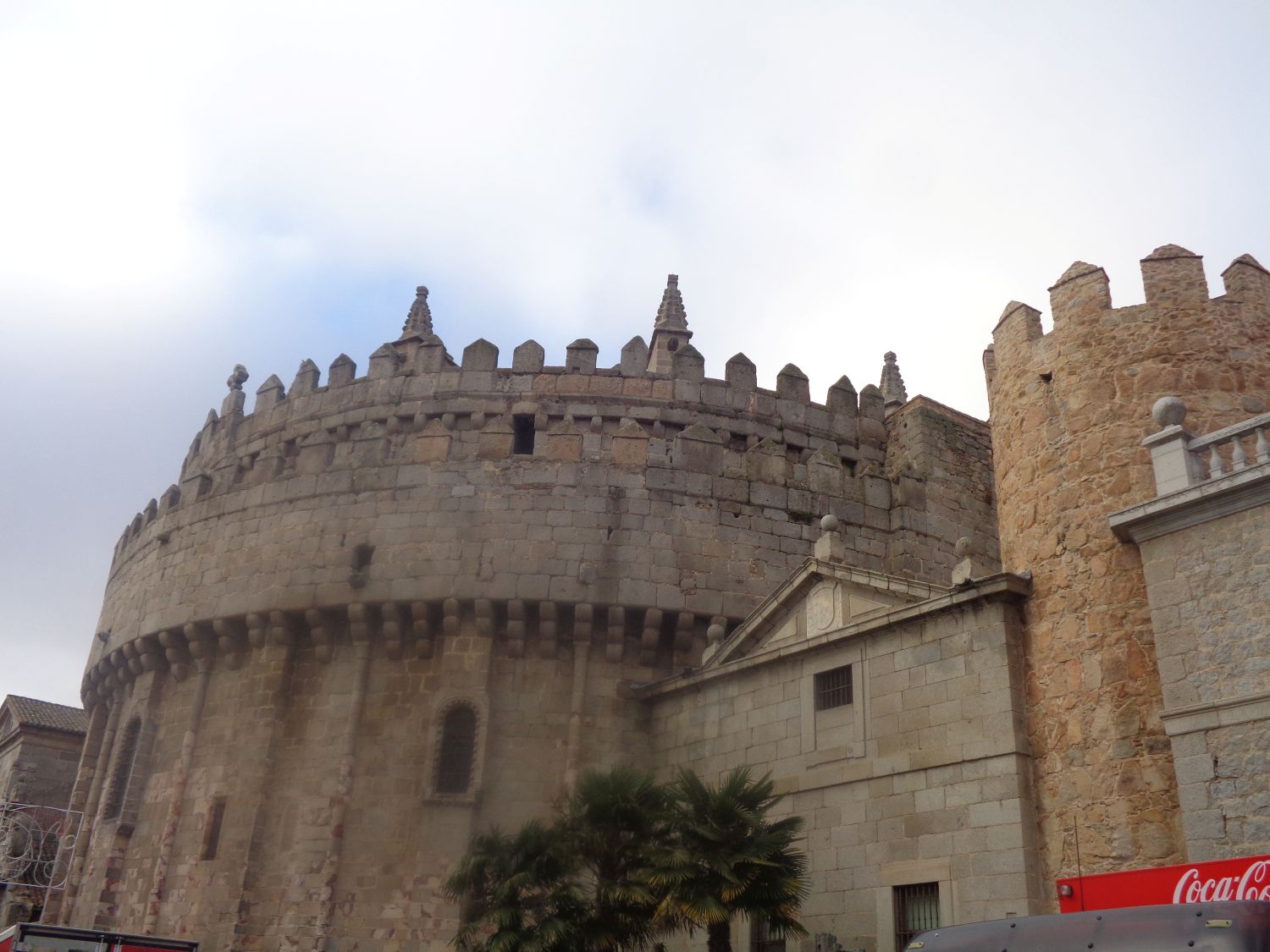
The Savior Cathedral is located at Plaza. de la Catedral, 8 , It enjoyed military and defensive function thanks to his fortified head. Initially it was built in Romanesque style, and at the beginning of the 13C a Gothic style is adopted, Inside the cathedral you have the Cathedral Museum, which houses an exhibition of religious art The Catedral del Salvador was built between 1160 and 1180 when the wall was being built. Its apse, called Cimorro, was entrusted in the wall itself being another element of the defensive set (it is considered the strongest). The external part of the Cimorro was endowed with a lining that increased its strenght at the end of the 14C hiding the absidioles.
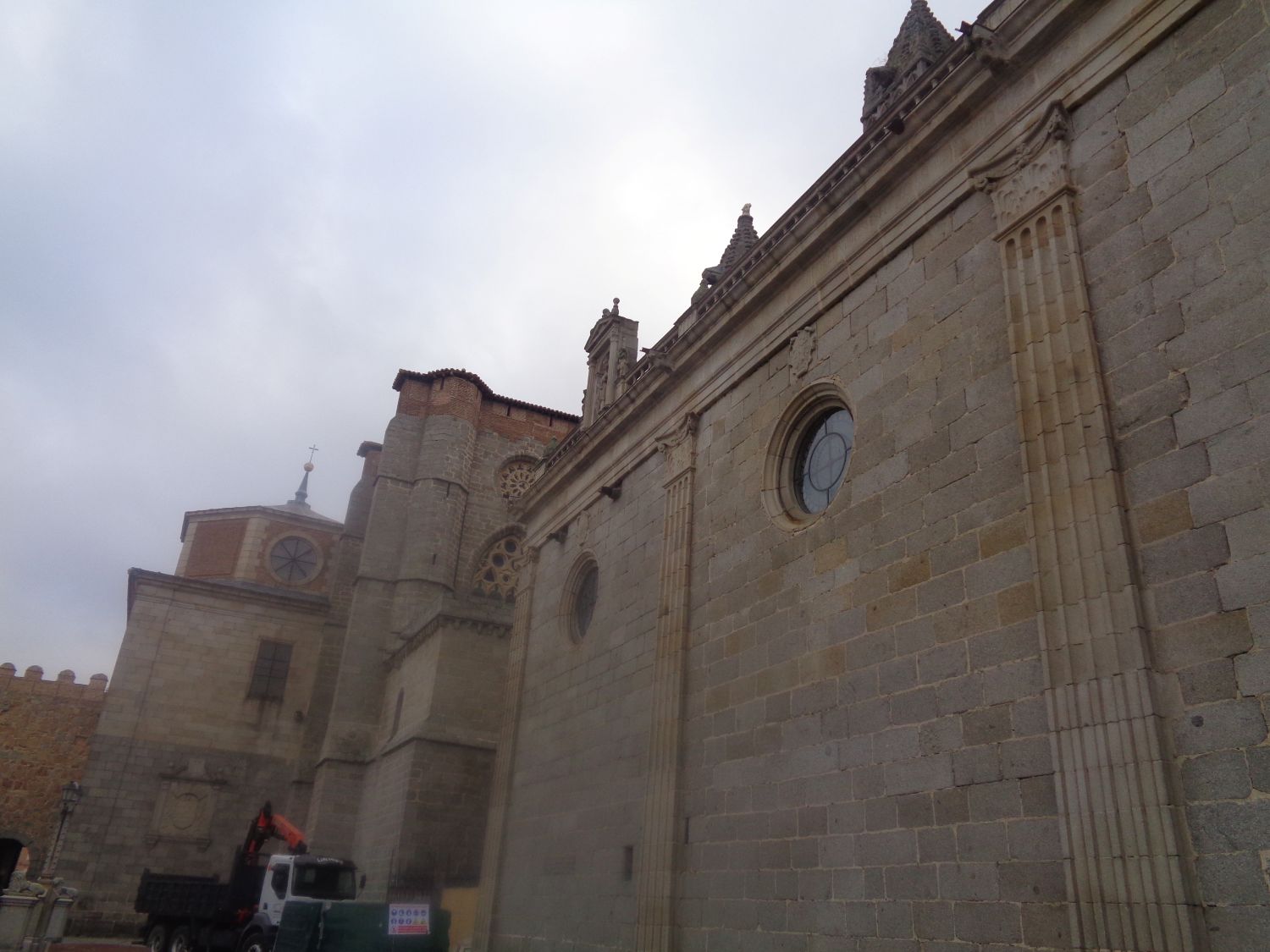
The Catedral del Salvador (the Savior) of Avila is the episcopal headquarters of the diocese of the same name. It was projected as a cathedral and fortress, being its apse one of the cubes of the city wall. It is not known precisely when the construction of the cathedral began, one that began to build it in 1091 on the remains of the Mozarabic Church of San Salvador, ruined by the successive Muslim attacks, and that Alfonso VI de León raised the money necessary to build it. However, the majority of historians grant the teacher Giral Fruchel (French) the authorship of the cathedral and dated her in the 12C, coinciding in the temporal line of the Castilian repopulation carried out by Raimundo de Borgoña (Burgundy). It is believed that Fruchel built the oldest part of the cathedral, the one corresponding to the head, while the body of naves, the adjacent chapels and the auction of the towers, would be the result of the successive works between the 13C and 16C. The third phase of the works belongs to the apogee of Gothic years, the end of the 13C until the middle of the 14C. At that time the nave was reformed, the cloister and the sacristies were held and the upper walls of the central nave were finished, supported by arbotants on thick buttresses although the right tower of the facade was not completed due to lack of funds. From the 13C they are the first body of the towers and the naves and the 14C, the second body of the towers ,unfinished, the cloister, the vaults and the arbotants. Already in the 15C all the works of the Cathedral are finished and, in 1475, Juan Guas builds the mechanical clock, in addition to moving the primitive western facade to the north side.
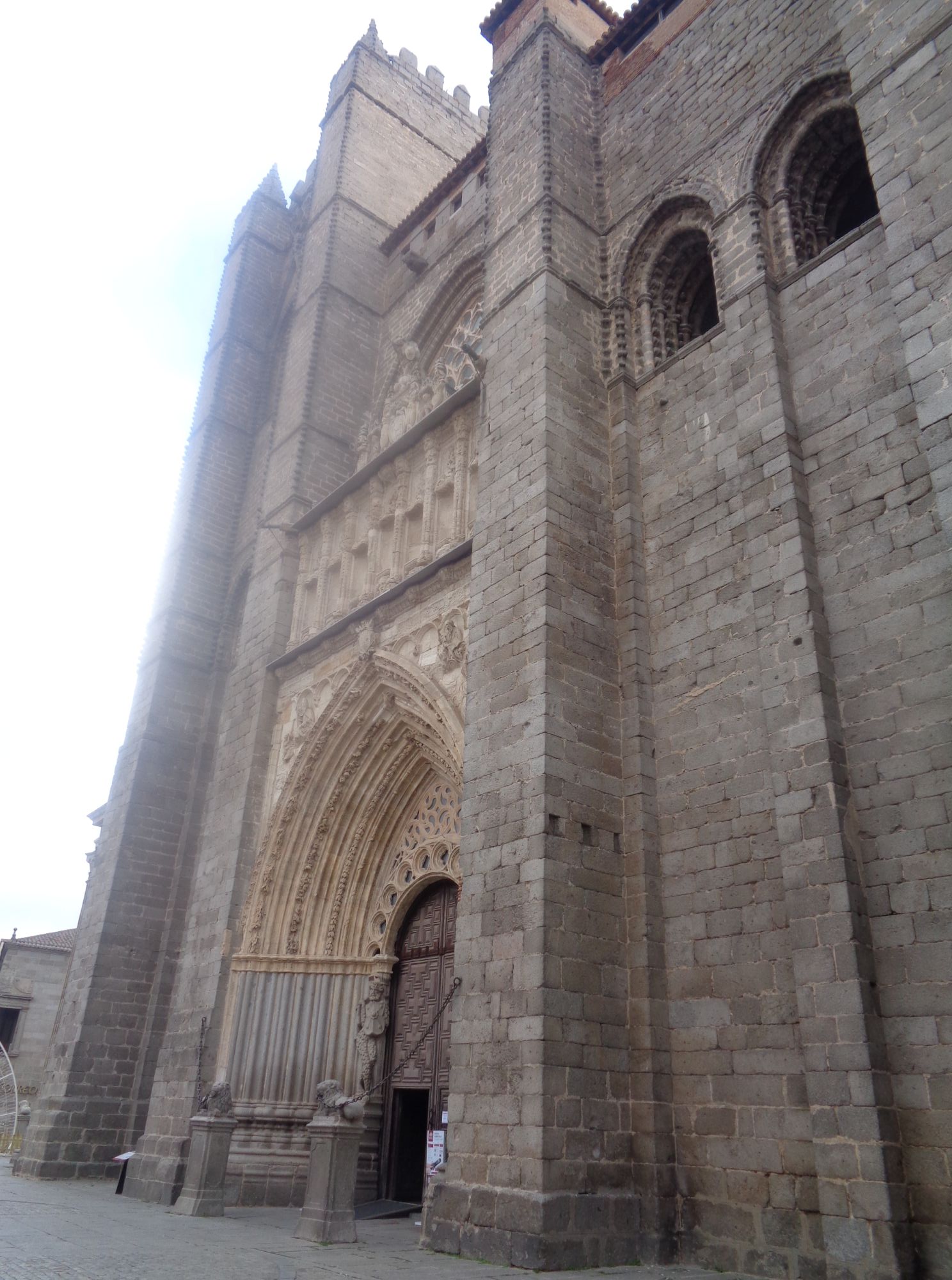
The development of the Cathedral throughout the centuries of construction means that there are different styles and influences in it, giving rise to a set of sober and fortified exterior that inside gives way to gothic lightness with touches of Renaissance architecture. This is the first Gothic cathedral in Spain, in the style of the French of the île-de-france region, being the area built by Romanesque transition to the Gothic style. Subsequently, different teachers continued and modified the works already in full Gothic style. The entrance of the western door is composed of a half -point arch decorated with medallions and floral motifs. A small eardrum is arranged on it in which a scene of the martyrdom of San Segundo appears (first bishop), followed by a succession of targeted archivolts that rest on fine columns. The cloister was started in the 14C in Gothic style and topped in the 16C by a Renaissance granite crest. Inside it has a cover of nave vaults and opens to the patio through large windows of the style of the full Gothic, but which are mostly the result of the restorations carried out in 1980.
The body of naves corresponds to a period in which the Gothic had entered a more refined and luminous phase. The three naves are of equal width but the plant is remarkably higher, and opens with large windows abroad. The vaults are mostly quadripartite simple crossing. The altarpiece of the cathedral shows evangelists dated 1499. The choir was conceived in origin in the main chapel, in the manner of the medieval cathedrals. However, the Spanish Renaissance tradition of placing the choir in the body of the nave leads to the City Hall to replace the original, of the 14C, with a new one whose masonry begins in 1536, The choir is a Renaissance piece organized in two orders of seats and worked in walnut wood. Magnificent geniuses and monstrous figures appear above, as well as the representation of the apostles in the central cloth. In the center, on the episcopal chair, a polychrome sculpture of the first bishop, San Segundo.
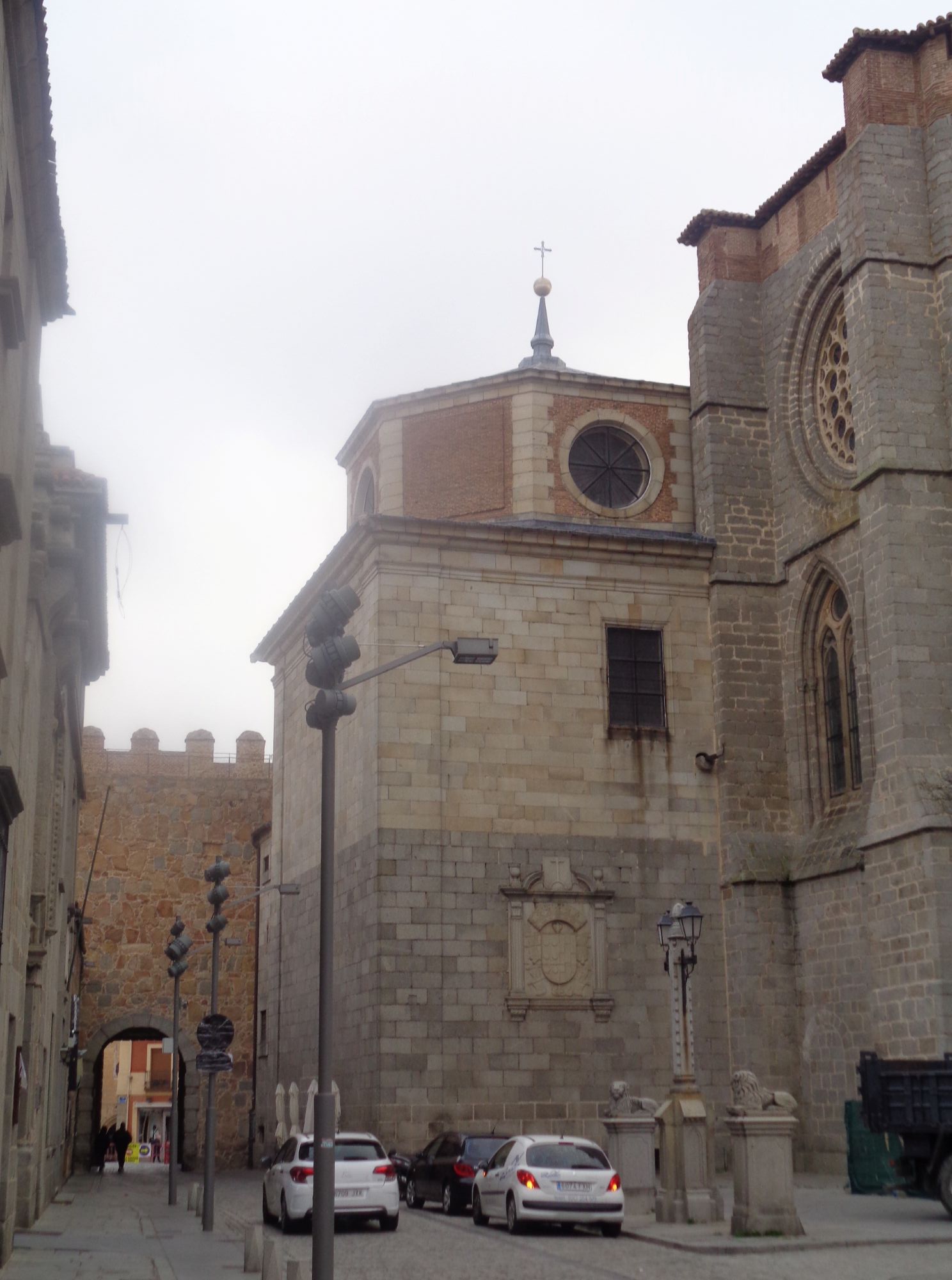
It is worth noting the existence of the “Casa del Campañero” inside the Tower. It is at the level of the bell body and it is a house with a simple Castilian style with room and two bedrooms, kitchen, and other small rooms that are part of the house. This house remains intact as the last companion inhabited until the 1950s. The most important stained glass windows are those corresponding to the girola, the main chapel, the presbytery and the nave, all of the 15C. We only find a single example of previous centuries, the upper central window of the main chapel, makes towards the 14C with solutions of form and color of the international Gothic. The windows that isolate the interior of the cloister were installed in 2004. In the cathedral, the mortal remains of the president of the first democratic government of Spain from 1976 to 1981 Adolfo Suárez and his wife, Amparo Illana lies,RIP
The official Catedral del Salvador of Avila : https://catedralavila.es/
The Avila tourist office on the Cathedral: https://www.avilaturismo.com/en/avila-cathedral-2
The Castilla y Léon regional tourist office on the Cathedral : https://www.turismocastillayleon.com/en/heritage-culture/cathedral-avila
The Castilla y Léon regional tourist office on the Cathedral museum: https://www.turismocastillayleon.com/en/heritage-culture/cathedral-museum-avila
The Unesco world heritage site on the old town and intramuros churches of Avila : https://whc.unesco.org/en/list/348/
There you go folks , another wonderful nostalgic, sentimental trip to my dear Spain, Do not know when we will be back, we sure will have this trip in our hearts forever, Again, hope you enjoy this post on the Catedral del Salvador of Ávila !!! as I
And remember, happy travels, good health, and many cheers to all !!!

 Paris1972-Versailles2003