
We were back to my dear Spain again !! love it !! We came by car of course and took time to see new areas and old repeat with some of them as introduction to my sons and our dog Rex ! I rented a small house in a off the beaten path country town that was just perfect ! I like to continue the saga of our new road warrior experiences even if now with less in our family, This post is on my latest road warrior tour of wonderful sublime Spain. Therefore, let me tell you about the Catedral de Santa María,aka Catedral Vieja of Salamanca !!! Hope you enjoy the post as I.

The City of Salamanca is capital of the province of Salamanca located in the Autonomous Community of Castilla y León, and in the kingdom of Spain. In 1988, the Old City was declared a World Heritage for UNESCO, The City is located 109 km from Ávila, 121 km from Valladolid, 123 km from Portugal and 214 km from Madrid.
Salamanca has two cathedrals, the Vieja (old) of the 12C and of Romanesque style, and the Nueva (new), much larger, started in the 16C in Gothic style and concluded in the 18C. The place where both are together is known as Patio Chico and is one of the most charming corners of the city. The main tower of the New Cathedral was built on the bell tower of the Old Cathedral. It is still visible a crack originated by the Lisbon earthquake of 1755. Cathedral Vieja Plaza Juan XXIII, s / n and Catedral Nueva Calle Benedicto XVI.
The Cathedral of Santa María, known as the Catedral Vieja, is one of the two cathedrals in Salamanca. Nearest the river, built in the late 12C and one of the most riveting examples of the Spanish Romanesque, Because the dome of the crossing tower has strange plumelike ribbing, it’s known as the Torre del Gallo (Rooster’s Tower). It is dedicated to Santa María de la Sede (Headquarters) .After the diocese of Salamanca by King Alfonso VI de León, and after the repopulation of the city carried out by his son -in -law Raimundo de Burgoña. It was about to be destroyed in the Modern Age, since when projecting the new cathedral, it was thought to tear it down, in this sense, in the plant, the left nave appears narrower and lacks part of the arm of the spire, as a result of the construction of the new cathedral.

The main altarpiece must be placed between 1430-1450 and there are three authors who work in the 53 tables that make up the altarpiece of the old cathedral The altarpiece presents a cycle of the life of the Virgin Mary and Jesus Christ, from the Birth of the Virgin until the transit of the Mother of Christ, all accompanied by scenes of the life of Jesus and topped by the magnificent final judgment. The altarpiece is chaired by an image known as the Virgen de la Vega, patron saint of the city. The image, made of wood, is covered with bronze overdorado with enamels and precious stones.
It is a basilical cathedral, in Latin cross and three naves, marked cruise and head for formed by three semicircular apses, which show windows with half -point arches. The element that stands out most of the monument is the considerable cimborrio that rises on the cruise supported by four impressive pechinas, and whose construction date must be located around the year 1150. In its inner part it has an open orange shape with sixteen segments, while that abroad instead it has an almost conical shape with scales decoration, popularly knowing it as the “Torre del Gallo”, since this animal appears in the weather vane than the crown. It relies on a drum with sixteen columns inside, lightened by 32 windows, 16 nerves are intended to be in the central part of the Cimborrio.
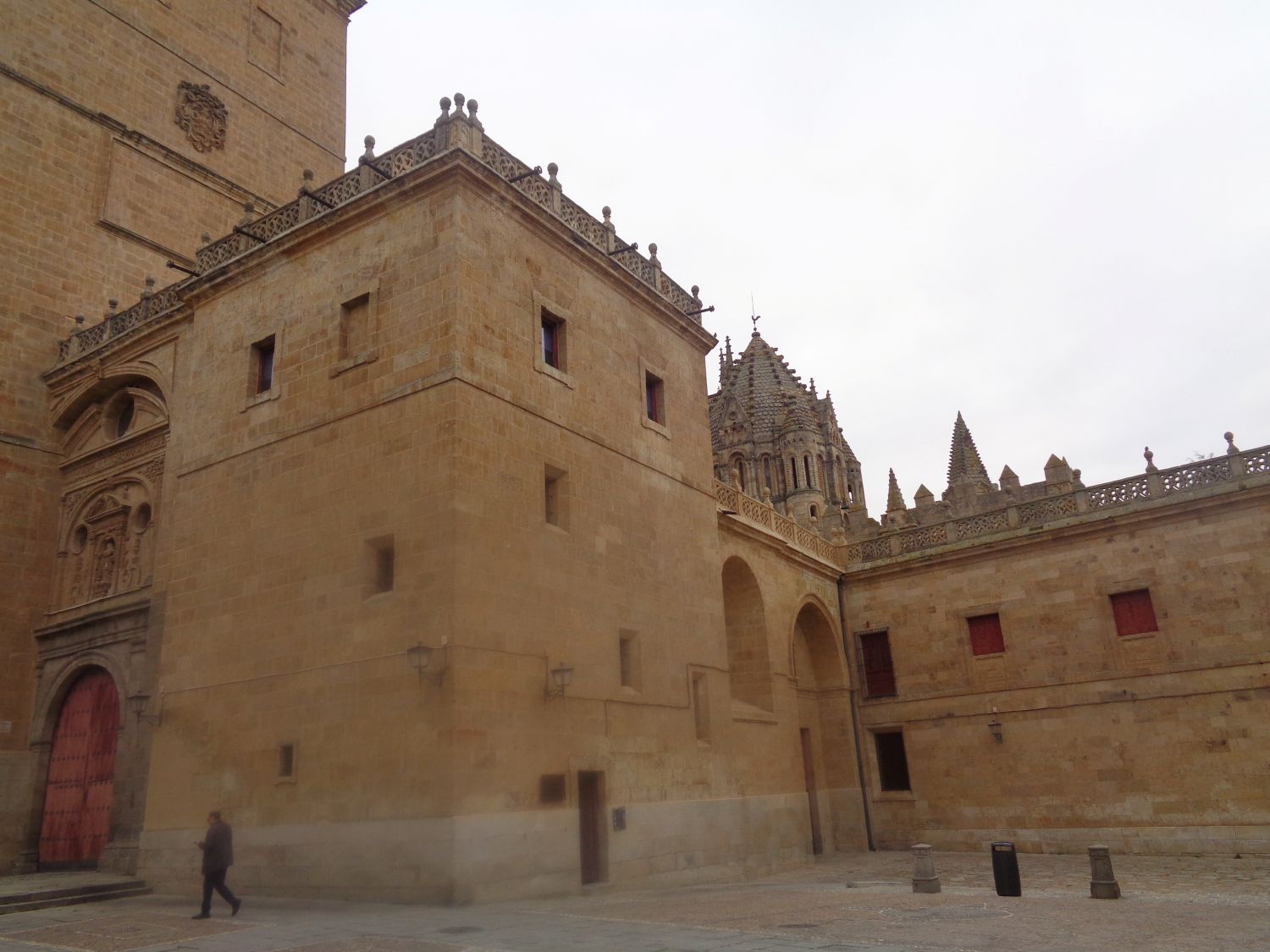
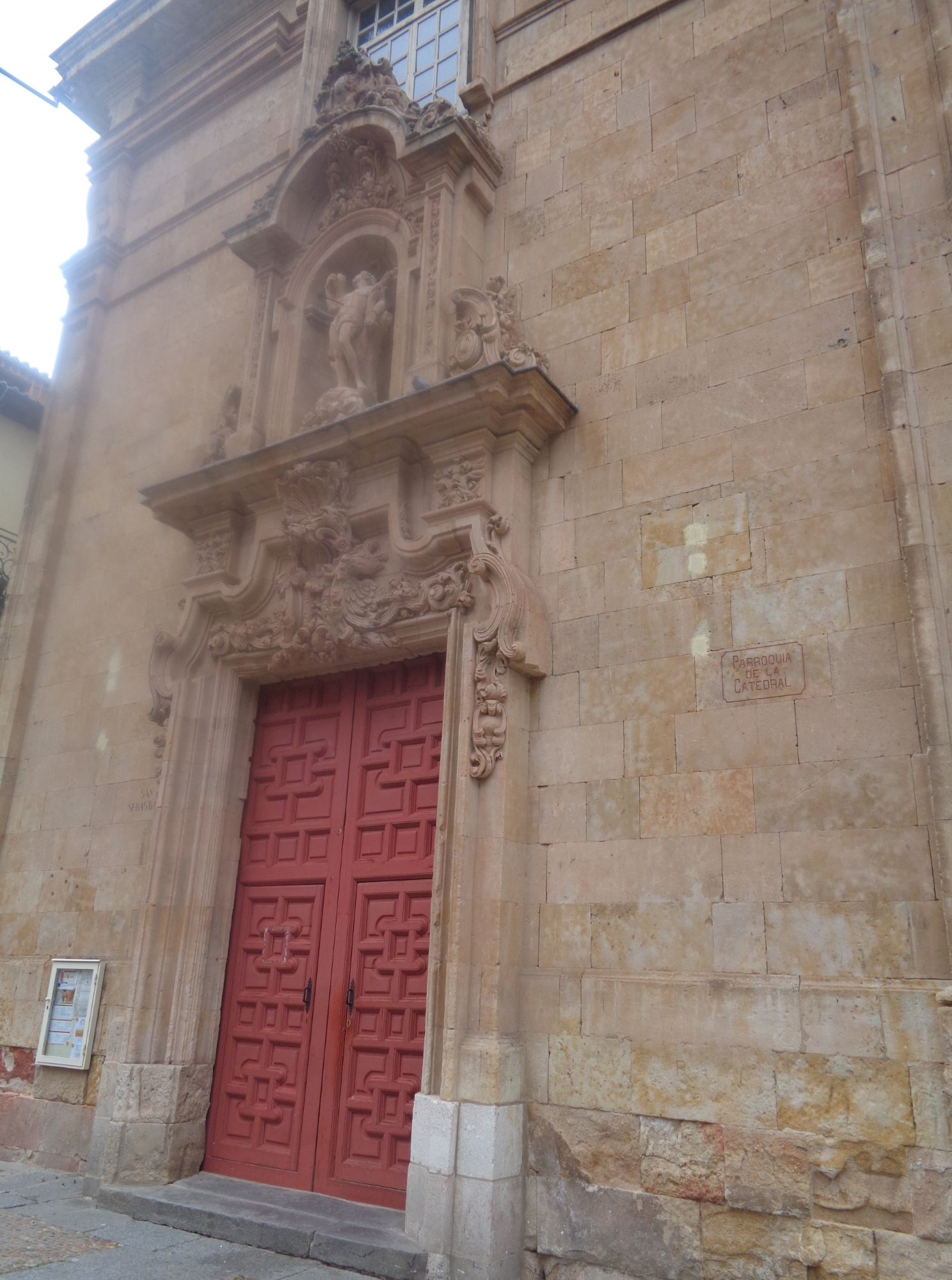
Little remains of the original facade, covered by another of the 18C. It is flanked by two towers; The one on the left ,tower of the bells, was under the tower of the new cathedral, and to the one on the right, which did not end, it was given the name of Torre Mocha, and can still be seen. The new cover, shortly after being built, it was partially covered, on its left side, by the stone slope that had to be done to reinforce the bell tower after the Lisbon earthquake. Other attractions that the temple has are, at the feet, under the tower of the bells, is the chapel of San Martín or the Aceite (oil). of 1262, being paintings considered as the oldest in Europe with a signature. In the cloister there are some frescoes from the 12C that decorate the graves and a series of chapels open, among which are that of Talavera, that of Santa Barbara, with the sepulcher of Bishop Juan Lucero, in which they carried out the degree exams of the University, that of Santa Catalina and that of San Bartolomé or Anaya. Other chapels are the Chapel of San Salvador or Talavera,
The primitive cloister suffered damage to the Lisbon earthquake and there are no appreciable remains. The current results from a subsequent reconstruction. The cloister chapter rooms are currently used as a Cathedral Museum hosting some of the paintings of which the council is depositary, these capitular rooms were built in 1526. The Cathedral Museum: Officially called Diocesan Museum of Salamanca, it is located in the capitular rooms of the Cathedral Vieja or old cathedral, and was inaugurated in 1953. It exposes some of the works belonging to the Treasury of the Cathedral.
The Casa de la Cabeza or house of the head is of the 16C in the chapel of Santa Catalina with entrance to Calle Gibraltar, in its origins could house the minor school of the house of Uclés of the Order of Santiago, motivated the one on the facade placed a relief with the head of Santiago Apostle that gives its name to the house, The restoration of the house has allowed integrating it into a tourist tour of the cathedrals, housing the rest room, toilets, memories and exit of the building. The archaeological remains found in the restoration process, which include two columns that could belong to the Romanesque cloister of the Cathedral, have been integrated into these spaces.
The official Catedral Vieja of Salamanca :https://catedralsalamanca.org/catedral-vieja/
The Catedral of Salamanca tour of the towers: https://ieronimus.es/
The City of Salamanca on its history : https://aytosalamanca.es/w/historia
The Salamanca tourist office on its heritage: https://salamanca.es/en/essential-salamanca/culture-and-cultural-heritage/monuments
The Castilla y Léon regional tourist office on the Catedrals Nueva and Vieja: https://www.turismocastillayleon.com/en/heritage-culture/cathedrals-salamanca
The Castilla y Léon regional tourist office on the Catedral Vieja museum : https://www.turismocastillayleon.com/en/heritage-culture/cathedral-museum-salamanca
The Unesco world heritage site on old town Salamanca: https://whc.unesco.org/en/list/381/
There you go folks , another wonderful nostalgic, sentimental trip to my dear Spain, Do not know when we will be back, we sure will have this trip in our hearts forever, Again, hope you enjoy this post on the Catedral de Santa María,aka Catedral Vieja of Salamanca !!! as I
And remember, happy travels, good health, and many cheers to all !!!

 Paris1972-Versailles2003