
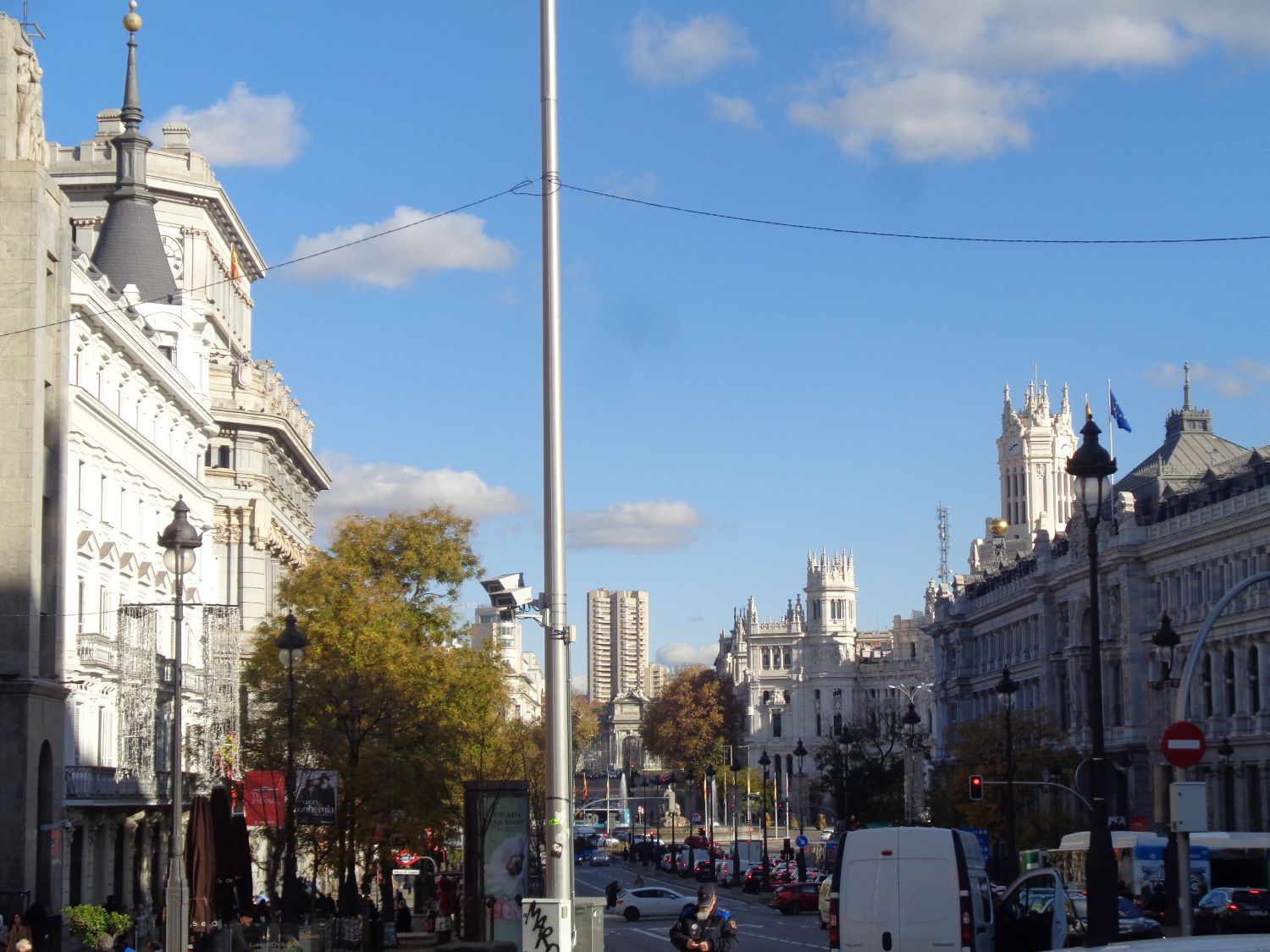
 The official Circulo de Bellas Artes : https://www.circulobellasartes.com/about-us/
The Teatro Alcazar theater (formerly called Palacio de los Recreos or recreation palace and Teatro Alkázar theater) is a theater hall on Calle de Alcalá 20 on the ruins of the old Trianón Palace. The luxurious theater was inaugurated on January 27, 1925 with the performances of the operetta Madame Pompadour of Leo Fall and capacity for more than eight hundred spectators. Although much of its history has been linked to the genre of the Spanish music reviews (with divas such as Celia Gámez, Lina Morgan or Esperanza Roy), at the beginning of the thirties it functioned as a movie theater, being one of the first rooms that incorporated sound projector. In 2012, the Teatro Alcazar was renamed the Teatro Cofidis Alcazar for its sponsor.
The official Circulo de Bellas Artes : https://www.circulobellasartes.com/about-us/
The Teatro Alcazar theater (formerly called Palacio de los Recreos or recreation palace and Teatro Alkázar theater) is a theater hall on Calle de Alcalá 20 on the ruins of the old Trianón Palace. The luxurious theater was inaugurated on January 27, 1925 with the performances of the operetta Madame Pompadour of Leo Fall and capacity for more than eight hundred spectators. Although much of its history has been linked to the genre of the Spanish music reviews (with divas such as Celia Gámez, Lina Morgan or Esperanza Roy), at the beginning of the thirties it functioned as a movie theater, being one of the first rooms that incorporated sound projector. In 2012, the Teatro Alcazar was renamed the Teatro Cofidis Alcazar for its sponsor.
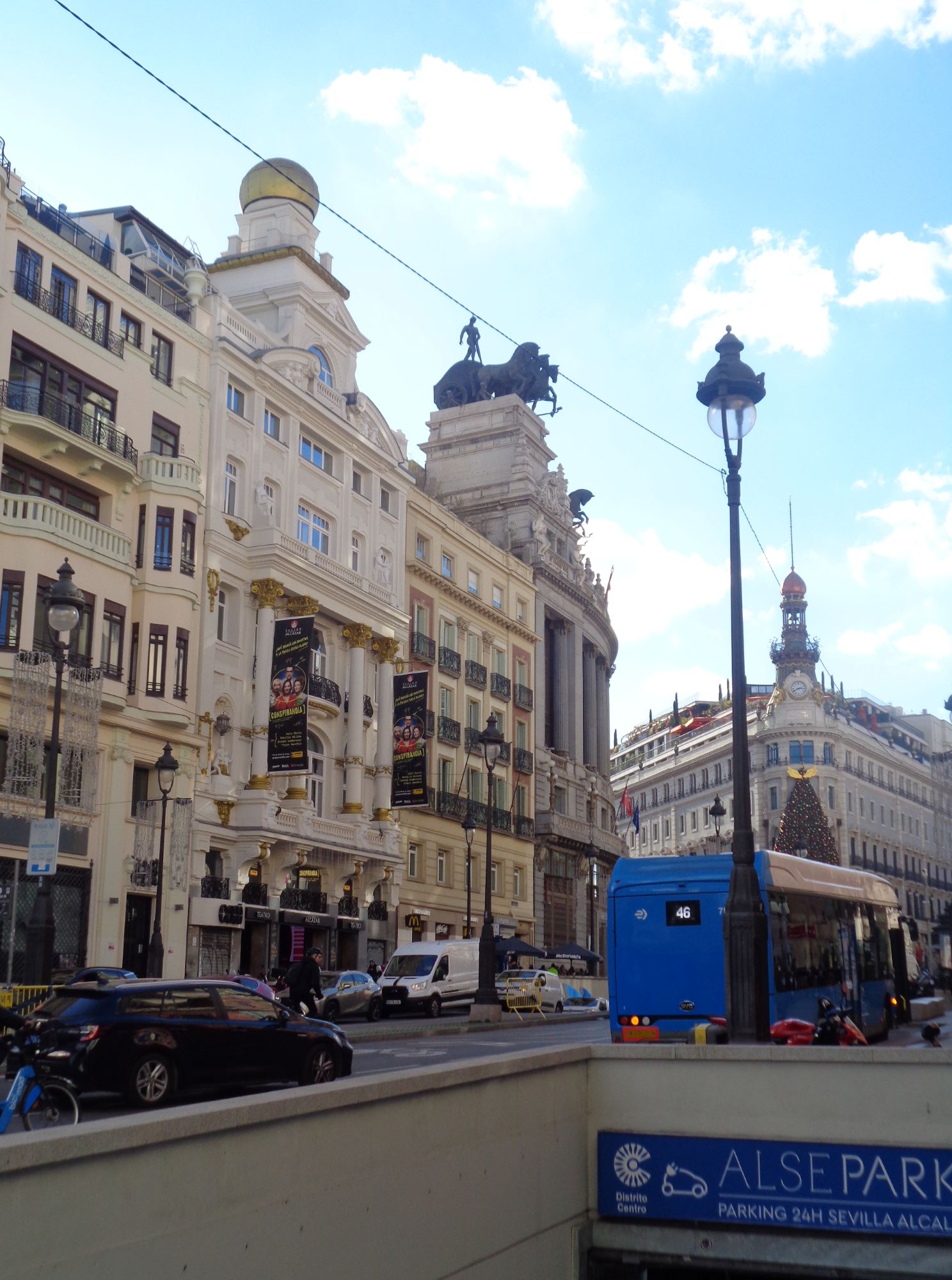 The official Teatro Cofidis Alcazar : https://gruposmedia.com/teatro-alcazar/
The Teatro Reina Victoria was inaugurated on June 10, 1916 by the Kings Don Alfonso XIII and his wife, Victoria Eugenia, of which it adopted her name. In the building it is possible to highlight its spectacular Claraboya on the armchair courtyard, which in its early years opened to provide ventilation of the room and also for the enjoyment of the spectators who went to the theater, a space that has capacity for more than 600 spectators , In his first artistic stage, the Reina Victoria Theater dedicated himself to representing musical pieces. It started with operetas and later with zarzuelas until specialized in high comedy. The Reina Victoria Theater was acquired in January 2018 by the García Azpiroz family, owner of Coruña fishmines, to the Arequipa Productions Society of actor Carlos Sobera. In September 2020, Pentación Espectáculos, under the direction of Jesús Cimarro, began to manage the central room.
The official Teatro Cofidis Alcazar : https://gruposmedia.com/teatro-alcazar/
The Teatro Reina Victoria was inaugurated on June 10, 1916 by the Kings Don Alfonso XIII and his wife, Victoria Eugenia, of which it adopted her name. In the building it is possible to highlight its spectacular Claraboya on the armchair courtyard, which in its early years opened to provide ventilation of the room and also for the enjoyment of the spectators who went to the theater, a space that has capacity for more than 600 spectators , In his first artistic stage, the Reina Victoria Theater dedicated himself to representing musical pieces. It started with operetas and later with zarzuelas until specialized in high comedy. The Reina Victoria Theater was acquired in January 2018 by the García Azpiroz family, owner of Coruña fishmines, to the Arequipa Productions Society of actor Carlos Sobera. In September 2020, Pentación Espectáculos, under the direction of Jesús Cimarro, began to manage the central room.
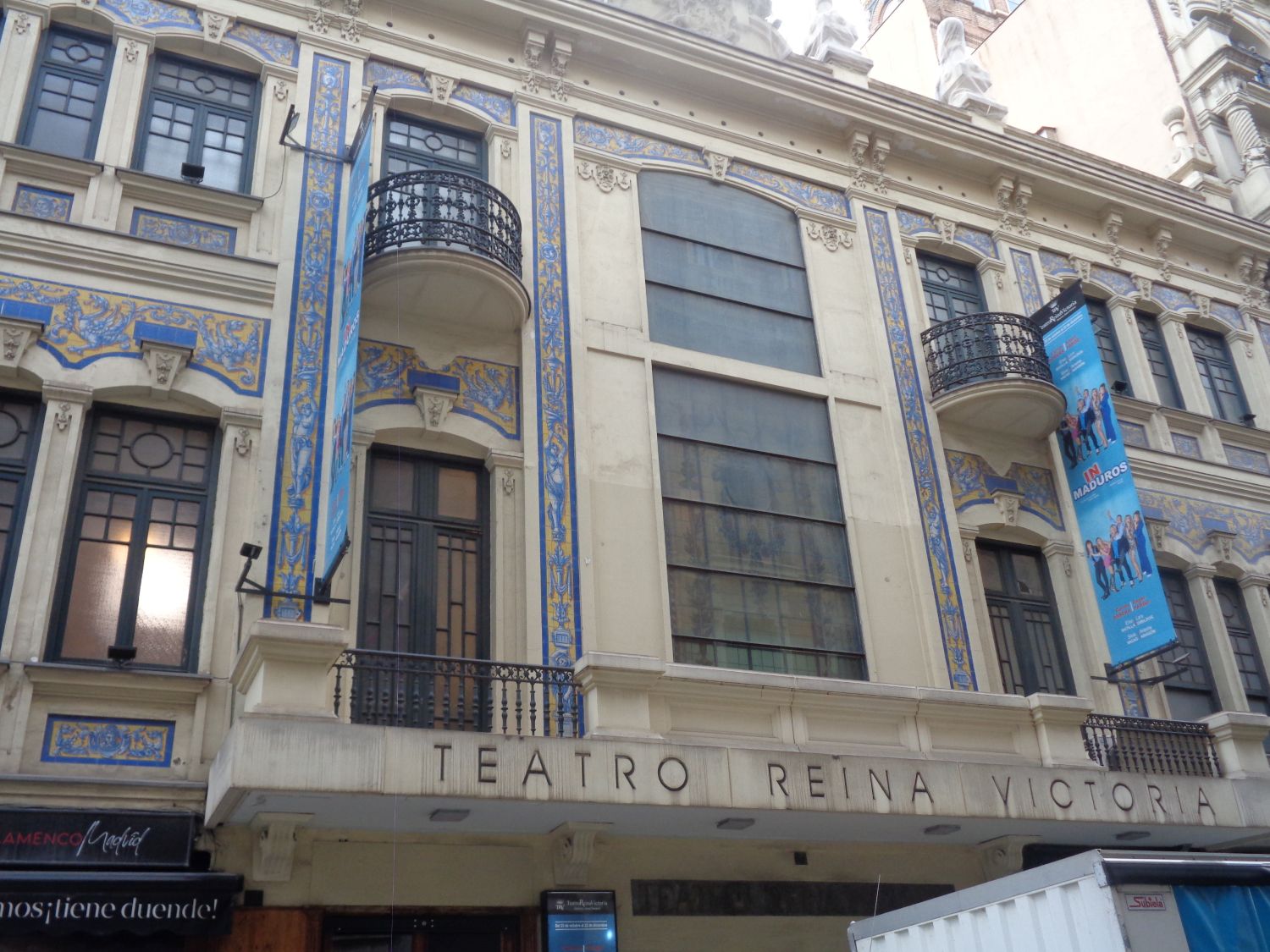 The official Teatro Reina Victoria : https://www.elteatroreinavictoria.com/
The Real Casa de Correos was built between 1760 and 1768 in the middle of Puerta del Sol to be headquarters of the postal service and did so in the baroque style of the time ; the building has a rectangular plant and is articulated around two small interior square courtyards. The clock turret dates from the 19C, and every December 31, the clock of the Real Casa de Correos or Royal House of the Post Office is the one who marks the end of the year for the Madrid and, broadcast on television, to all of Spain. Since 1985 it is owned by the Community of Madrid, placing in it the headquarters of the Presidency.
The official Teatro Reina Victoria : https://www.elteatroreinavictoria.com/
The Real Casa de Correos was built between 1760 and 1768 in the middle of Puerta del Sol to be headquarters of the postal service and did so in the baroque style of the time ; the building has a rectangular plant and is articulated around two small interior square courtyards. The clock turret dates from the 19C, and every December 31, the clock of the Real Casa de Correos or Royal House of the Post Office is the one who marks the end of the year for the Madrid and, broadcast on television, to all of Spain. Since 1985 it is owned by the Community of Madrid, placing in it the headquarters of the Presidency.
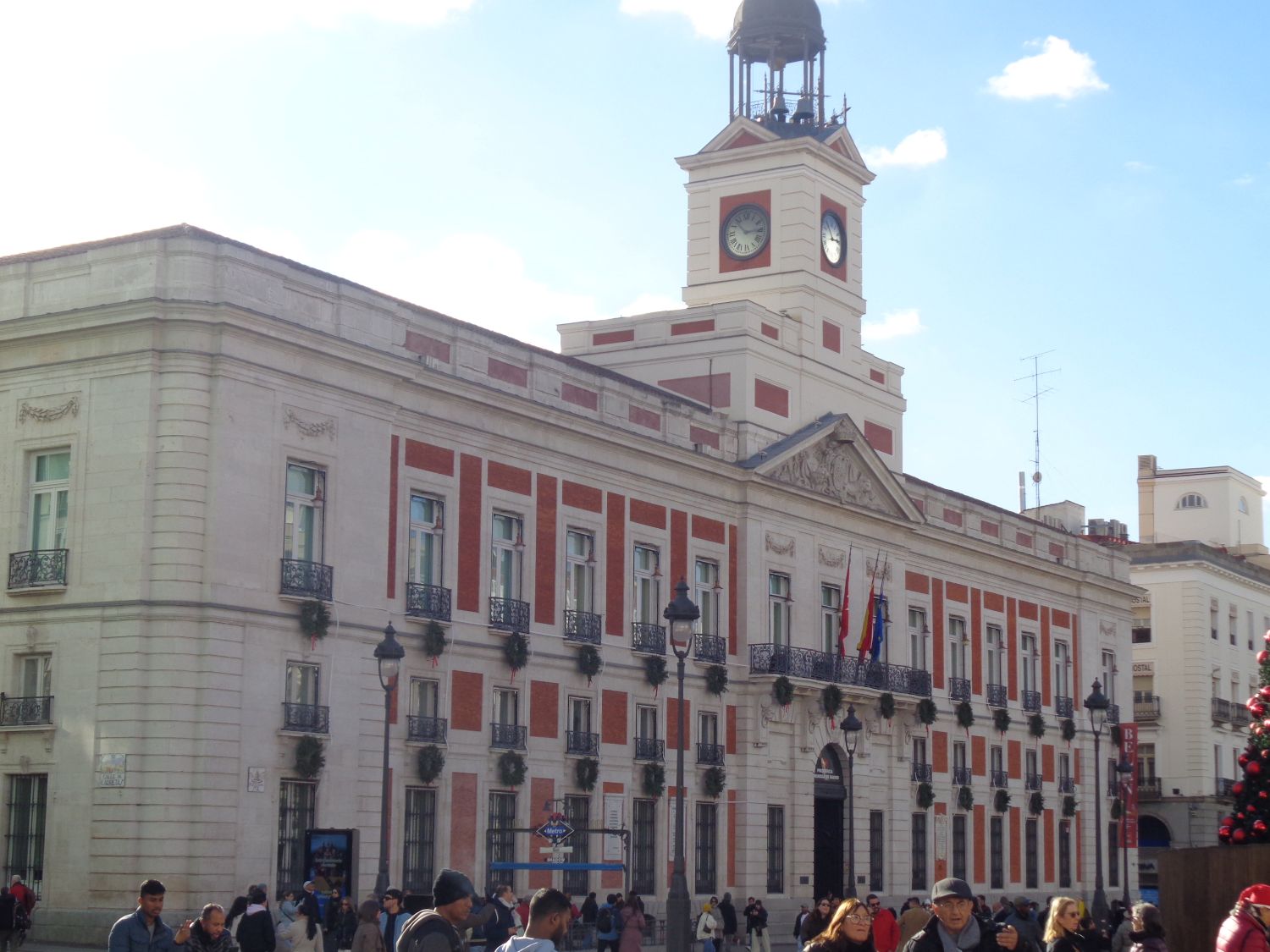 The Madrid tourist office on the Real Casa de Correos : https://www.esmadrid.com/en/tourist-information/real-casa-correos
The Plaza de las Cortes makes the junction between Sol and the Prado, along the Carrera de San Jerómino. The most notable building is the Congreso de los Diputados. The favorite of the Plaza de las Cortes, the great Miguel de Cervantes statue facing the Congress of Deputies. This sculpture, from the year 1834, keeps a curious fact and that is that it was the first public tribute that a person who did not belong to the field of politics or royalty or religion received in Spain !!
The Madrid tourist office on the Real Casa de Correos : https://www.esmadrid.com/en/tourist-information/real-casa-correos
The Plaza de las Cortes makes the junction between Sol and the Prado, along the Carrera de San Jerómino. The most notable building is the Congreso de los Diputados. The favorite of the Plaza de las Cortes, the great Miguel de Cervantes statue facing the Congress of Deputies. This sculpture, from the year 1834, keeps a curious fact and that is that it was the first public tribute that a person who did not belong to the field of politics or royalty or religion received in Spain !!
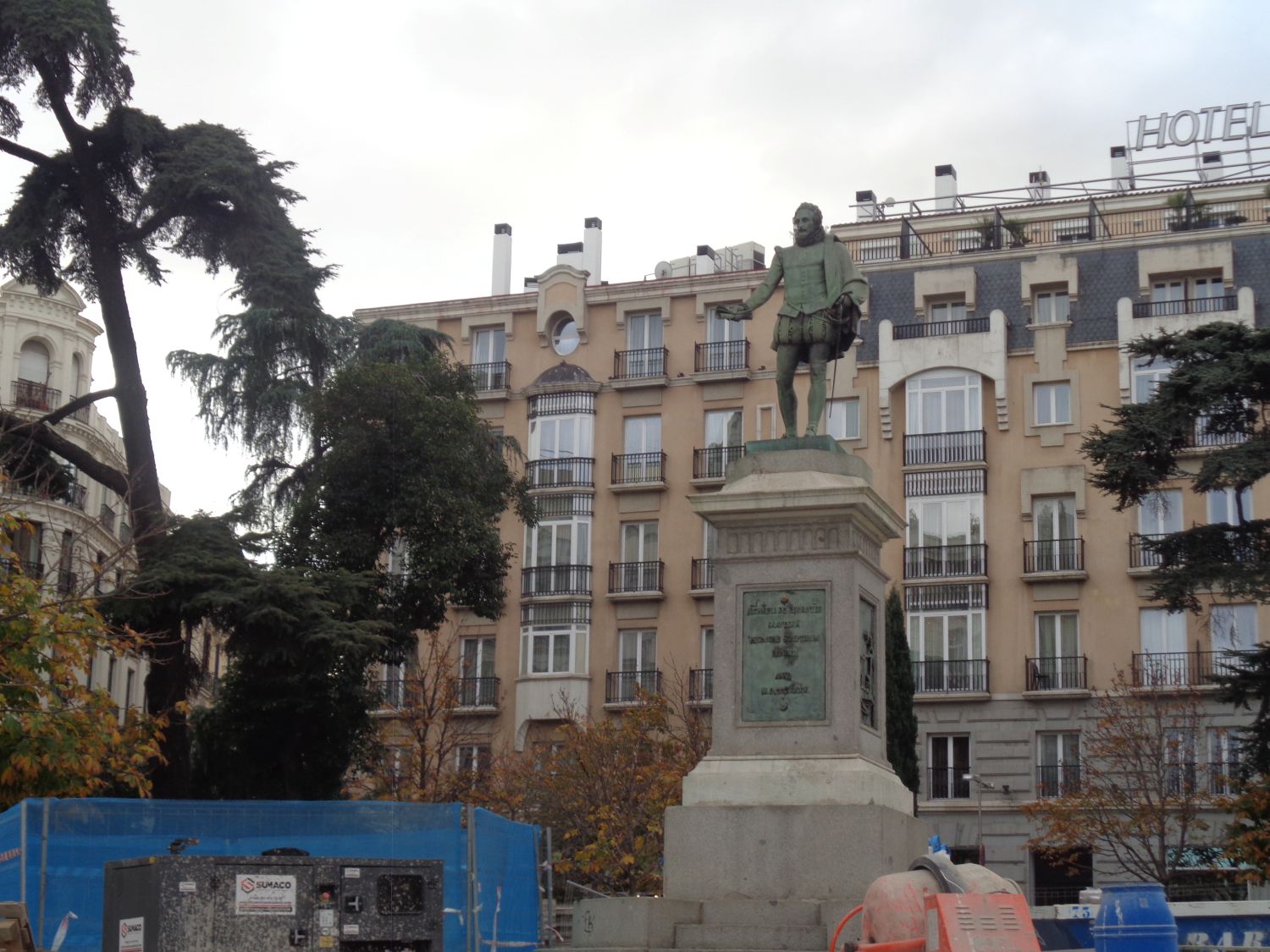 The Madrid tourist office on the Cervantes statue: https://www.esmadrid.com/en/tourist-information/miguel-cervantes-statue
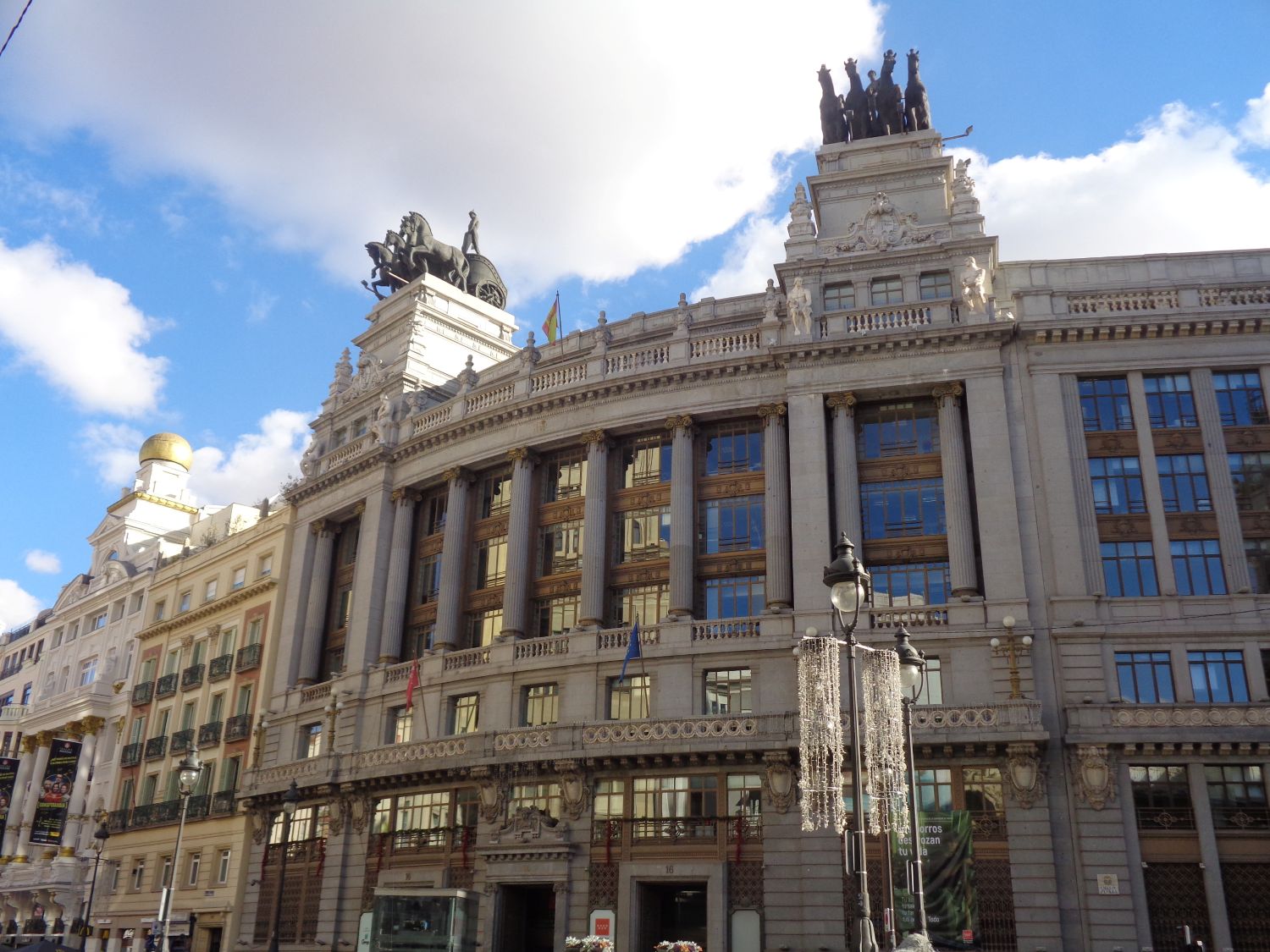
The Banco Bilbao Vizcaya (BBVA) located at Calle de Alcalá, 16, has quadrigas dragged by four horses, whose leg stands out from the facade, flying over the sidewalk. The quadrigas were made in an alloy of bronze, lead and iron, with a golden brass coat and each of them weighs 12.5 tons and is four meters high, The drivers are not found inside the quadriga, but rather they appear standing, in a pedestal located on the carriage, so that they can be seen from the street.
The Madrid tourist office on the Cervantes statue: https://www.esmadrid.com/en/tourist-information/miguel-cervantes-statue
The Banco Bilbao Vizcaya (BBVA) located at Calle de Alcalá, 16, has quadrigas dragged by four horses, whose leg stands out from the facade, flying over the sidewalk. The quadrigas were made in an alloy of bronze, lead and iron, with a golden brass coat and each of them weighs 12.5 tons and is four meters high, The drivers are not found inside the quadriga, but rather they appear standing, in a pedestal located on the carriage, so that they can be seen from the street.
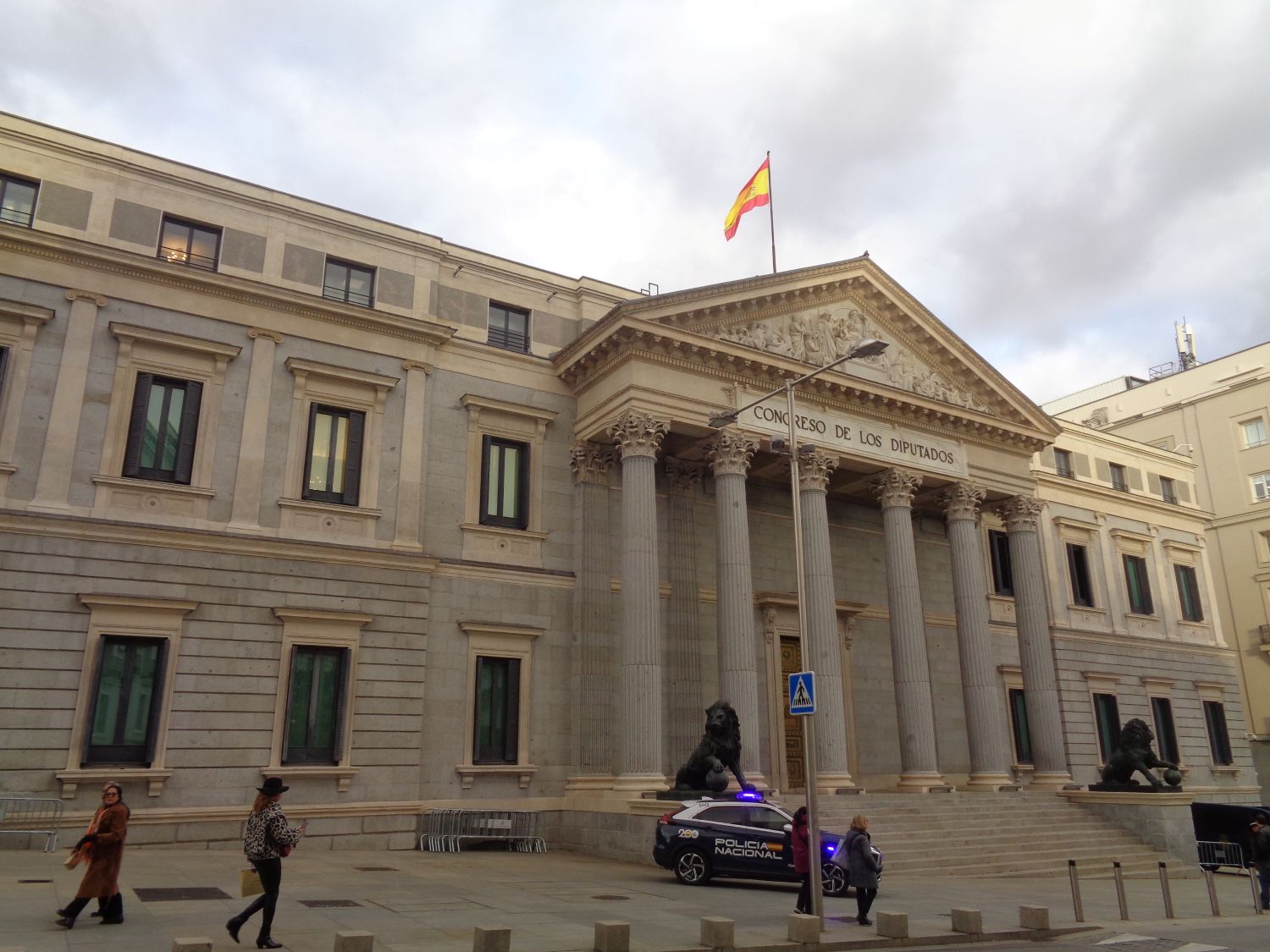
 The imposing Palacio de las Cortes, the name of the building that houses the Congreso de los Diputados, that was built between the years 1843 and 1850. This is one of the two chambers of the Cortes Generales, the Spanish parliament. It is very close to Paseo del Prado, and is one of the emblematic buildings of the 19C, in neoclassical style. In this spot was before the Convent of the Holy Spirit, inside which, curiously, some sessions of the Cortes were held.
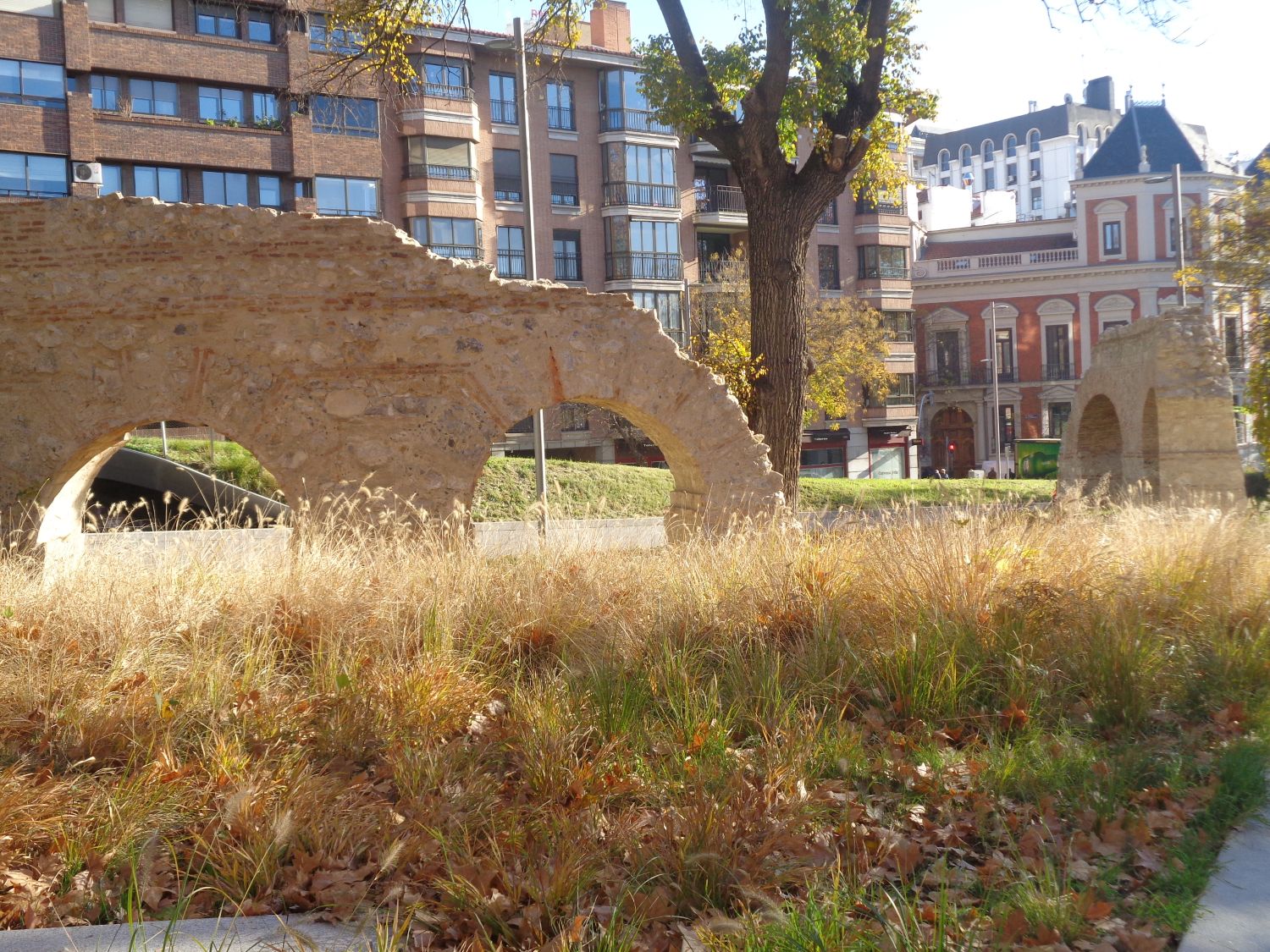
 The Cuartel de San Gil or Leganitos barracks was a military installation projected by Francesco Sabatini, it was built in the northern part of what is now the Plaza de España. It was demolished at the beginning of the 20C, Ruins part of its wall are now shown in the Parque de la Montaña very close to the Temple of Debod.
 There you go folks , another wonderful nostalgic, sentimental trip to my dear Spain, A love affairs with my Madrid, as do not know when we will be back, we sure will have this trip in our hearts forever, Again, hope you enjoy this post on curiosities of Madrid, part VIII !!! as I
And remember, happy travels, good health, and many cheers to all !!!
There you go folks , another wonderful nostalgic, sentimental trip to my dear Spain, A love affairs with my Madrid, as do not know when we will be back, we sure will have this trip in our hearts forever, Again, hope you enjoy this post on curiosities of Madrid, part VIII !!! as I
And remember, happy travels, good health, and many cheers to all !!! 
 Paris1972-Versailles2003