
And I was back to pretty quant Lisbon, a lovely city with plenty to see and do. One of my favorite cities of Europe and looking forward to come back again , and did !!! However, several posts on monuments etc, I like to tell you about a chic avenue I always stay just off of it. The time has come to tell you a bit more of the Avenida da Libertade of Lisbon, part II !!! Hope you enjoy the post as I

The Avenida da Liberdade is one of the main avenues of Lisbon. It links Praça dos Restauradores to Praça Marquês de Pombal. (see posts) ,With nearly 90 meters wide and 1,500 meters long, it includes several traffic lanes and wide sidewalks with Portuguese gardens. Lined with plane trees, palm trees and other trees, adorned with statues and dotted with clumps, it is also considered the Champs Elysées of Lisbon. It is the 6th most expensive street in Europe. Yes indeed. It is served by the Marquês de Pombal, Avenida da Libertade , and Praça dos Restauradores metro stations.

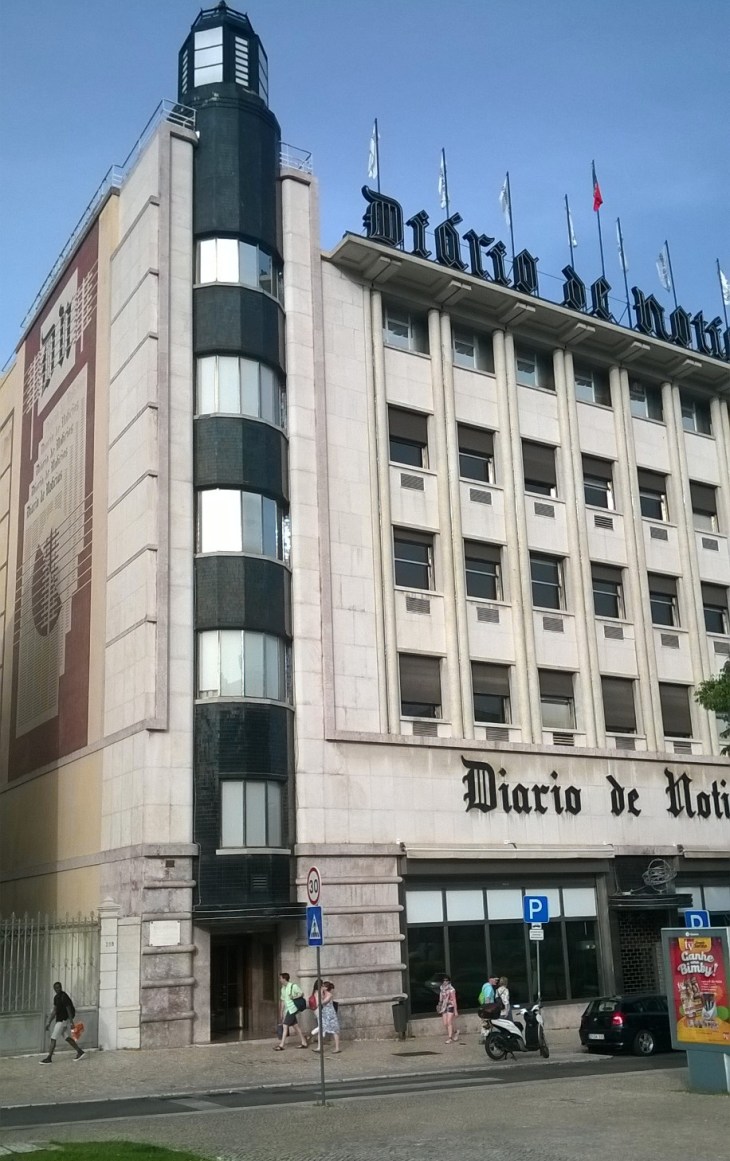
The Avenida da Libertade notably includes major brands stores and also houses the few hotels and palaces in Lisbon. The avenue is the seat of some major Portuguese brands such as the newspaper Diario de Noticias. There is also the famous Cinema São Jorge, as well as restaurants, etc. The avenue to be seen chic and nice in Lisbon.
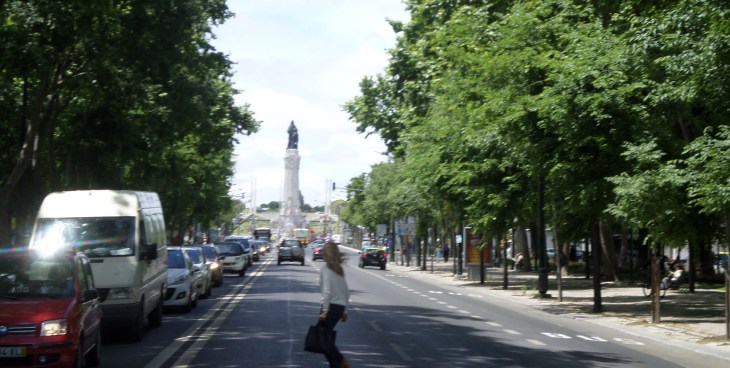
I will try to give you a rundown of it north to south, The Upper part of the Avenida da Libertade, at the foot of the Statue of the Marquis de Pombal, offers a global view of the artery, with its plane trees, its gardens, its traffic lanes. By starting the descent, the luxury boutiques are linked, and bring us to the middle of the Avenue.
In the middle of the Avenue, a stone’s throw from the Avenida metro station, is the Tivoli Theater. Built in 1924 after almost four years of work, its main role was devoted to the seventh art which was beginning to develop. The neoclassical building is a unique element of its kind that blends nicely into the landscape of the Avenue. Today the theater offers a fairly varied program with successful plays and sometimes even concerts. There is also a bar and a restaurant.
Slightly offset from the Avenue but so close that it would be a shame not to have made a detour, the Lisbon Botanical Garden is very easily accessible. Covering an area of forty hectares, the garden was inaugurated in 1878. From 1876, the French botanist Jules Daveau finished the lower part. Recognized for its subtropical flora, it depends on the Faculty of Science of the University of Lisbon.
Located in the middle of the Avenue, the War Memorial of the Great War (WWI) was inaugurated in November 1931. At Santa Ana, you will approach the upper part of the district which begins north of the Baixa. Quite popular area with many bars and grocery stores and other small shops. Quite typical with narrow, cobbled streets, it leads to Jardim do Torel or Campo dos Mártires da Pátria.
Heading into the lower part of the Avenida da Libertade leads you to the Praça dos Restauradores and the Baixa district. Always as green, it rubs shoulders with two of the city’s emblematic funiculars.
At the Praça da Alegria, you see the jardim Alfredo Keil .This small garden was created in 1882, on the site of an old flea market less and less frequented. There is also a fountain and a few benches. It is named after the painter and composer Alfredo Keil, author of the national anthem in 1891. A statue of his bust stands in the garden.
You cross the garden and continue straight on towards Avenida da Liberdade which you will take on your right. This leads you to the Funiculare do Lavra . This is the oldest of Lisbon’s famous historic funiculars c. 1882. It was electrified and modernized in 1915, powered by the Santos power plant created for the electric network of of electric trams. It goes up and down the Calçada do Lavra for 188 meters with an average slope of almost 23%.
South of the Avenida de Libertade from the exit of the funicular and down to Praça dos Restauradores, the district is on the border of Rossio or Sant’Ana. The Funiculare de Glória at the base of the Avenue has its lower station. It allows you to quickly reach the nearby Bairro Alto and admire the panorama from the Sao Pedro de Alcantara lookout. Commissioned in 1885, the Glória funicular is the most popular of the famous Lisbon’s historic elevators.
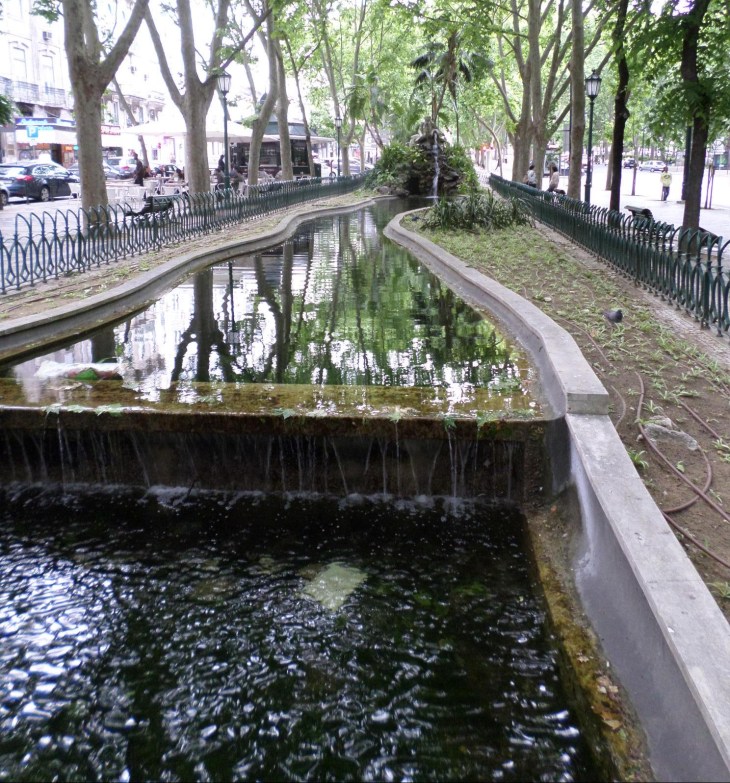
The Avenida da Libertade offers its shaded sidewalks and colorful facades, all interspersed with gardens and other fountains. There are also terraces where you can have a drink when the sun is shining above the trees. A wonderful walk anytime, hope you enjoy it as I did!
The Lisbon tourist office on things to see: https://www.visitlisboa.com/en/c/sightseeing-and-activities
The Guia da cidade or city guide on Lisbon with things on Avenida da Libertade : https://www.guiadacidade.pt/pt/poi-avenida-da-liberdade-16422
There you go folks, a wonderful walk, I said, looking forward to do it again, eventually, The Avenida da Libertade is pretty with wonderful places to see ,do and eat in Lisbon, Again, hope you enjoy the post on the avenida da Libertade of Lisbon, part II !!! as I.
And remember, happy travels, good health, and many cheers to all !!!

 Paris1972-Versailles2003