
I have found older paper pictures that should be in my blog even if quality is not as good, This is a work of love and nostalgia of times and places that will never be back from a beautiful city of Havana, now mostly in ruins, This is my native capital City, the city where I spent a great part of my very early life until 10 years old, Luckily was able to visit it in 1984, 1998, and 2012 , This is Havana or La Habana or the full name San Cristobal de La Habana, the capital of the Republic of Cuba. This is my Habana and would like to share these new old pictures with the world; do see my other posts on it, Therefore, here is my take on the historical castles of Havana, part II !! Hope you enjoy the post as I.
The Castillo de los Tres Reyes Magos del Morro is located at the entrance of the Bay of Havana, next to the fortress of San Carlos de la Cabaña, the Castillo de los Tres Reyes del Morro or castle of the three kings of the morro, was one of the strategic points of the defense of the city during the Spanish occupation. The construction of the castle took place between the years 1589 and 1630, at the same time as the Castillo San Salvador de la Punta, an impregnable fortress up to 1762, when the English troops after a siege of about two months, managed to get the castle of the Three Wise Kings of the Morro and therefore the city. An irregular polygon that is formed by huge walls of 3 meters of height surrounded by a deep moat. The most emblematic point of the castle is the lighthouse of the Morro, it has illuminated the entrance of the boats to the bay from 1844. With a height of 30 meters, it is the ideal place to enjoy with the panoramic view of the Malecon of Havana, especially at dusk. Nowadays, it is part of the Morro-Cabaña military historical Park, along with the nearby fortress of San Carlos de la Cabaña, and inside it is the Maritime Museum. In turn, two restaurants, the 12 Apostoles or apostles and the Divina Pastora or divine shepherd and a bar are housed in the old batteries with extraordinary panoramas of the Havana coast.

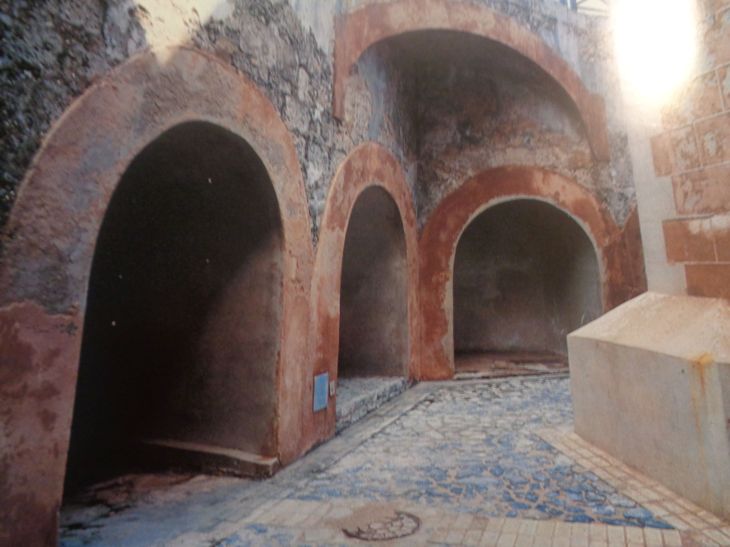
The Fortaleza de San Carlos de la Cabaña was done after the British took Havana in 1762, besieging the castle of Morro from the hill where today stands the Fortress San Carlos de La Cabaña, the Spaniards realized that they needed to build a new fort that complemented the defenses of the city . When they recovered the villa in 1763,(treaty of Paris), the construction of the fortress began. It was the most expensive building that financed Spain outside the peninsula, being also today the largest fortress in all of America. With the triumph of the Cuban revolution in 1959, Che Guevara installed his command center in San Carlos de la Cabaña. At this time numerous deaths by firing squads were also carried out. Today the San Carlos de la Cabaña fortress functions as a historic park, along with the nearby Morro Castle. Also inside is the museum of fortifications and Weapons as well as restaurants and shops. But the most famous attraction is the cannon at 9pm or 21h, recreated by military dressed in 18C uniforms. It is reminiscent of the time when Havana was surrounded by ramparts, whose gates were closed every day at 21h. Currently, with its 700 meters from extreme to extreme and its 19 ha, it is the largest fortress in all of the Americas.


The Castillo de la Real Fuerza is located next to the Plaza de Armas, in the heart of Old Havana, the castle of the Royal Forces was part of the defensive ensemble that the city had during the colonial era, next to the San Salvador de la Punta Castle and the Morro-Cabaña military historical Park. The Royal Force Castle was the first to be built in Havana, in fact it is considered the oldest stone fortress in America. The works began in 1558 and were terminated in 1577, although it soon lost its defensive function due to its remoteness from the bay. In 1588 became the residence of the Governor of Havana,The castle has housed the national archives since 1899 and the National Library from 1938 to 1957. After the Cuban revolution, it welcomed the Commission of Monuments and the Preservation of Heritage, then briefly the Museum of the Revolution, now installed in the ex-Presidential palace. It then hosted a museum of contemporary art, until 1990, then a ceramic museum until 2007.Today the castle of the Royal Force houses the Museo de la Navegacion, or Maritime museum some says the best in Cuba, In the museum, various objects related to the life and functions of the castle dating from the 16C to the 18C are also exposed. and is surrounded by an impressive moat. The most striking element of the ensemble is the tower that houses the Giraldilla, it was added in 1634. It is a woman-shaped vane that is one of the symbols of the city, besides being the oldest cast bronze sculpture in Cuba. The weather vane that can be seen today on the Torre de la Espera or tower of waiting is a copy, the original is kept in the museum of the city. The name was due to the legend that says that Dona Inés de Bobadilla, wife of the Spanish conqueror Hernando de Soto, who remained as governor of Cuba while her husband tried to conquer the Florida, climbed every day to the tower to wait the arrival of her husband’s galleon, who never returned, since he died in the attempt of that conquest.
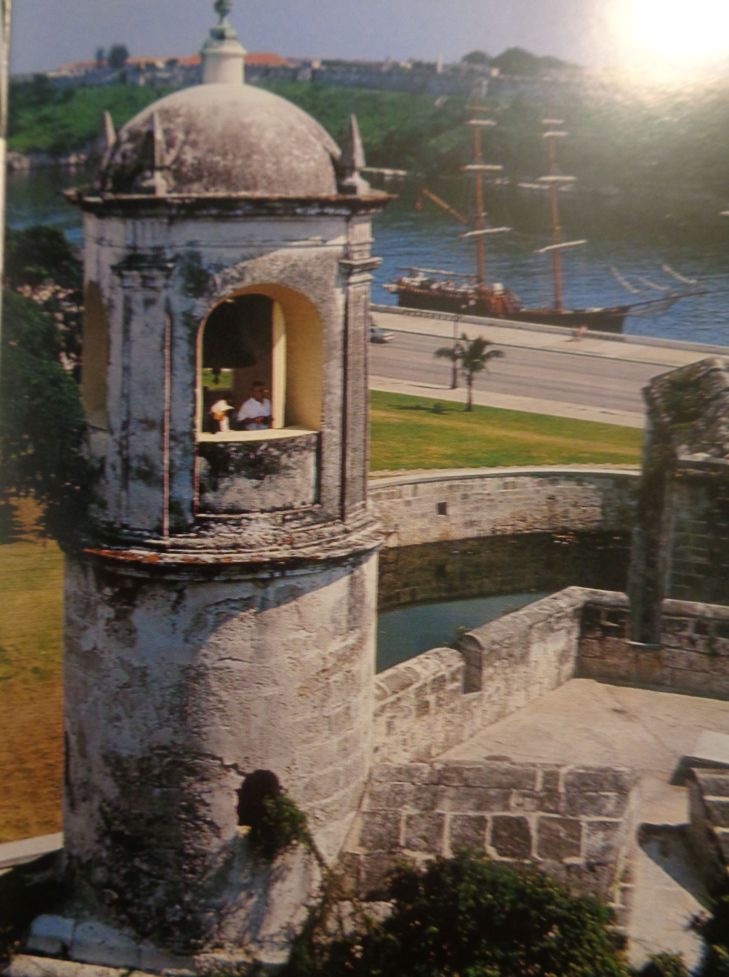
There you go folks, another dandy of my old Havana, memories forever, even if today they are becoming blurred and far away in my mind. Havana still an attracting place even if the crowds are different and the conditions worse; life goes on in this sad forgotten island of Cuba under a long dictatorship . Again, hope you enjoy the post on the historical castles of Havana ,part II !! as I.
And remember, happy travels, good health, and many cheers to all !!!

 Paris1972-Versailles2003