
I have found older paper pictures that should be in my blog even if quality is not as good, This is a work of love and nostalgia of times and places that will never be back from a beautiful city of Havana, now mostly in ruins, This is my native capital City, the city where I spent a great part of my very early life until 10 years old, Luckily was able to visit it in 1984, 1998, and 2012 , This is Havana or La Habana or the full name San Cristobal de La Habana, the capital of the Republic of Cuba. This is my Habana and would like to share these new old pictures with the world; do see my other posts on it, Therefore, here is my take on a beach and gardens of Havana !! Hope you enjoy the post as I.
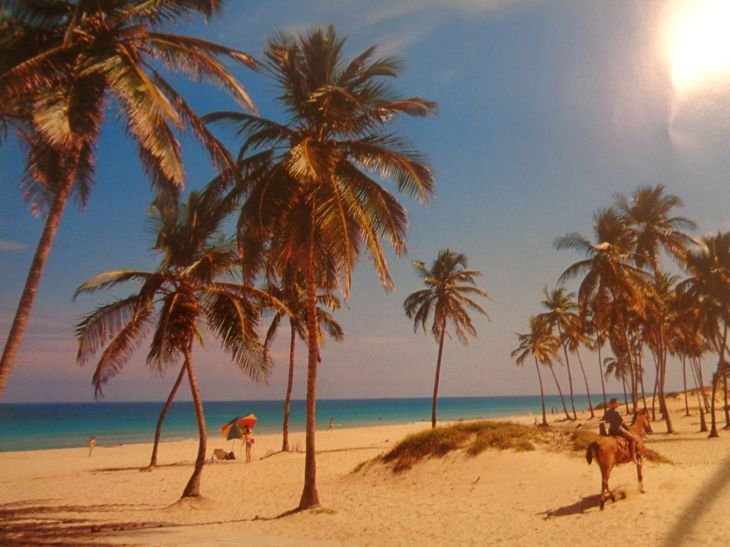
Santa María Del Mar is a sandy beach 35 km from the city center of Havana it is part of a beach area call Playas del Este, and it was one of my family’s best while on the island many moons ago,and very popular with the local population as of today, The whole follows over 24 km along the north coast of the province of Havana, the white sandy beach with warm turquoise blue waters, bordered by coconut palms and sea grapes, The beach of Santa Maria del Mar itself is about 10 km long ! The coastal strip in front of the dune began to be urbanized in the 20C for tourist purposes and several private clubs were installed and summer housing were built. When the Cuban revolution triumphs, the clubs were nationalized and most of the owners of houses left the country dissatisfied with the political process In front of the Santa María dune are various tourist centers such as the Villa Los Pinos Hotel, the Tropicoco Hotel , the Las Terrazas Hotel, the Caribbean Club and the Atlantic Hotel. Which never tried as we went as a young boy by car same day,52 km (32 mi) away,
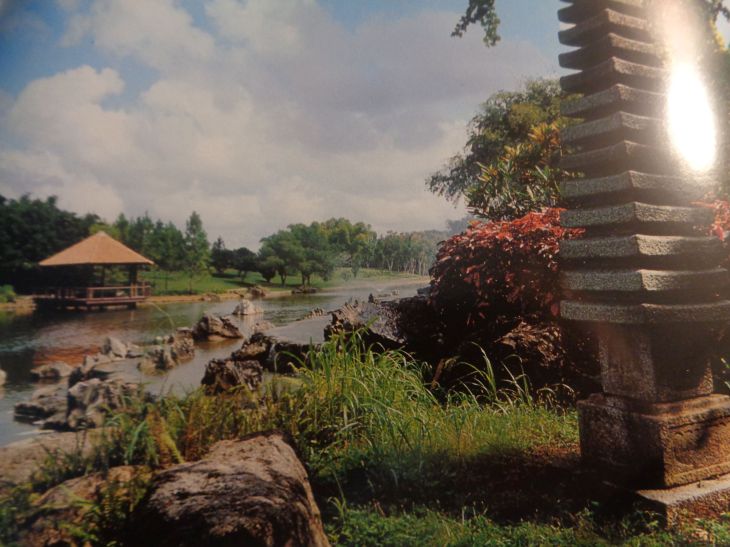
The Jardin Botanico National (National Botanical Garden) has an area of about 600 hectares and in which about 4,000 plant species are exposed. It was open to the public in 1984, and is located about 25 km south of Havana. It now is managed by the University of Havana, which has as its objectives, to promote knowledge, in the general population, of the aspects related to the plants, emphasizing the native flora. It was created with direct advice of Prof. Dr. Johannes Bisse (Friedrich Schiller University of Jena, Germany) for its construction. Its exhibition area covers about 2 353 m², and consists of a covered part with 3 pavilions, and another exterior in which there is a pond for aquatic plants and collections of ornamental plants. The pavilions are 9 meters high and plants of approximately 600 species belonging to 250 genera from 90 families are exhibited. The pavilions briefly are the Casa de Cristal, with plants of tropical and subtropical arid areas. The pavilion of alta humedad or high humidity with plants of economic interest such as cacao, café, black pepper, vanilla, On the outside a collection of aquatic ornamental plants appears outside and terrestrial, with a section dedicated to plants with Paquicaules trunks (thickened trunks to store water). The Jardin Japonés or Japanese garden caught our interest in 1998, It was inaugurated in 1989, the work of the Japanese landscape architect Yoshikuni Araki, is nestled in the phytogeographic area of East South Asia, with an extension of five hectares, exposes plants of that Asian region and others appropriate to create the landscape environment “Kaiyu-Shiki- Teien “(walking garden), in which with the technique” Mie-Gakure “, of the ” Shakkei ” hills, from any point in the garden you can see the entire landscape. It has a waterfall, a lake and a “ukimi-dou” lookout.
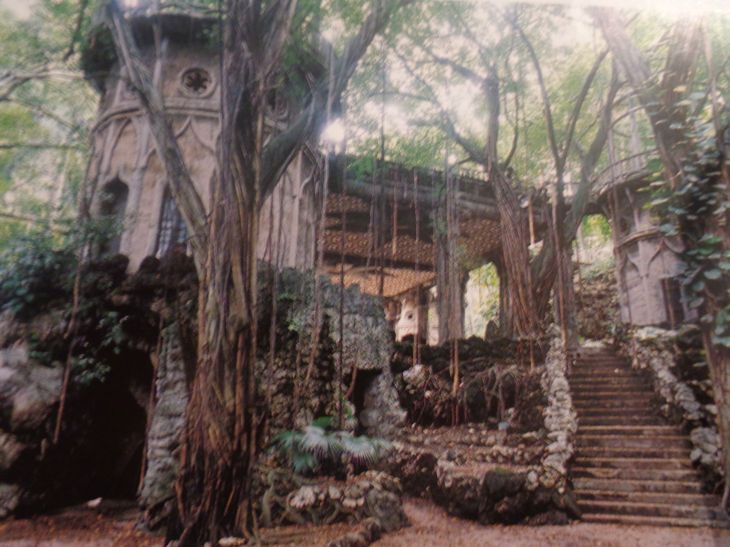
The amazing Jardines de la Tropical gardens were built at the end of the 19C by the Herrera family, owners of the Cerveceria La Tropical brewery, Cosme Blanco Herrera, president of the factory, bought La Tropical, it was the old property of Andrés Fernández. The new owner enlarged it, modernized it and opened it to the public in 1897. In 1917, taking advantage of the success of his frozen drinks, he opened a life center near the factory for his workers. The place had a company school as well as a park to ventilate the employees on Sundays. The huge park opened on the upper terrace. A median -size castle stood up with an eclectic facade but a Moorish interior. Built in 1912, the whole consisted of fountains and water games and salons decorated with azulejos tiles and stucco. Everything was inspired by the Alhambra of Granada. The main room served as a playing and dance room, in the 1920s.Once the small castle passed, you go into alleys that led to false ruins in the tone of contemporary public parks in Europe. On the early part of the 20C the park quickly became a place very frequented by the Cuban high society. The best orchestras were performing there, then into a restaurant Madrid, then closed and disused in the 1960s. The building then fell into obligatory and the neglected buildings fell in ruins. Then in the early 2000s the renovations began and lasted 10 years to transform the place into a cultural center taken in over by the Havana metropolitan park to make it an ecological zone. To access it, you go by Avenida 51,in the town of Marianao now part of Havana, Near the Puentes Grandes. My parents went many times here was very nice and popular another gone by in Cuba.
There you go folks, another dandy of my old Havana, memories forever, even if today they are becoming blurred and far away in my mind. Havana still an attracting place even if the crowds are different and the conditions worse; life goes on in this sad forgotten island of Cuba under a long dictatorship . Again, hope you enjoy the post on a beach and gardens of Havana !! as I.
And remember, happy travels, good health, and many cheers to all !!!

 Paris1972-Versailles2003