
We are back to my dear Spain again !! love it !! We came by car of course and took time to see new areas and old repeat with some of them as introduction to my sons and our dog Rex ! I came into Medina del Campo after several years and it was sublime ! I like to continue my road warrior stories this time in Medina del Campo, Therefore, here is my take on the curiosities of Medina del Campo !!! part I, Hope you enjoy the post as I,
The City of Medina del Campo is located in the province of Valladolid and the autonomous community of Castilla y Léon in the kingdom of Spain, It is 54 km from Valladolid City , 42 km from our rental house in Velliza, and 160 km from Madrid. We walked a lot in the city ,and saw many wonderful monument ,buildings you name it. I like to keep them in my blog for the memories of always and return, eventually.
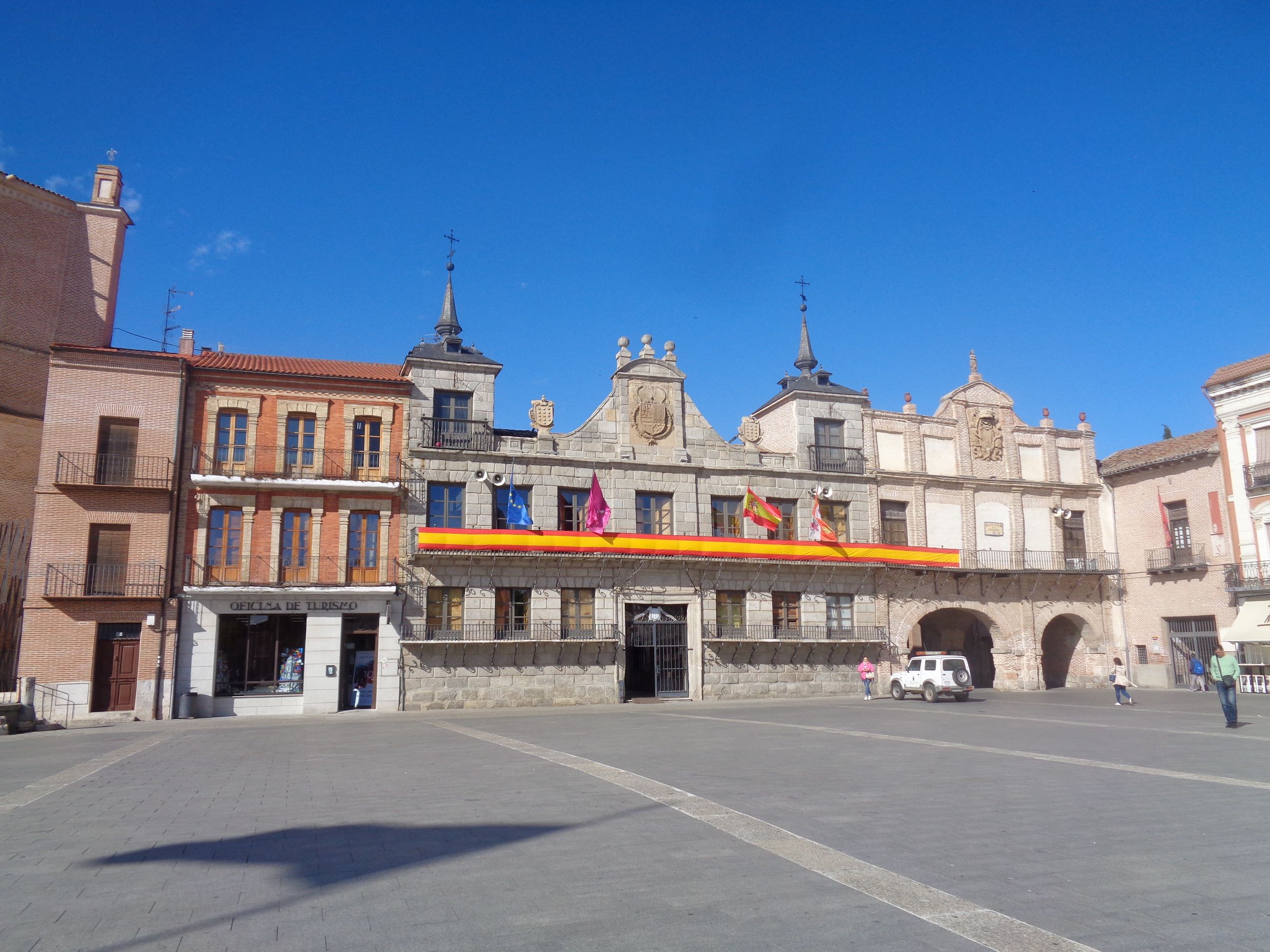
The building that rises next to the Tourism Office is the City/Town Hall, and beyond the Royal Testamentary Palace, This is the Casa Consistorial, or City hall,The City of Medina del Campo. It has a main facade, symmetry predominates, it has two balconies, one per level, it dates from the 17C, Throughout the centuries, other constructions have been incorporated, such as the Casa de los Arcos or house of the arcs, due to space needs.
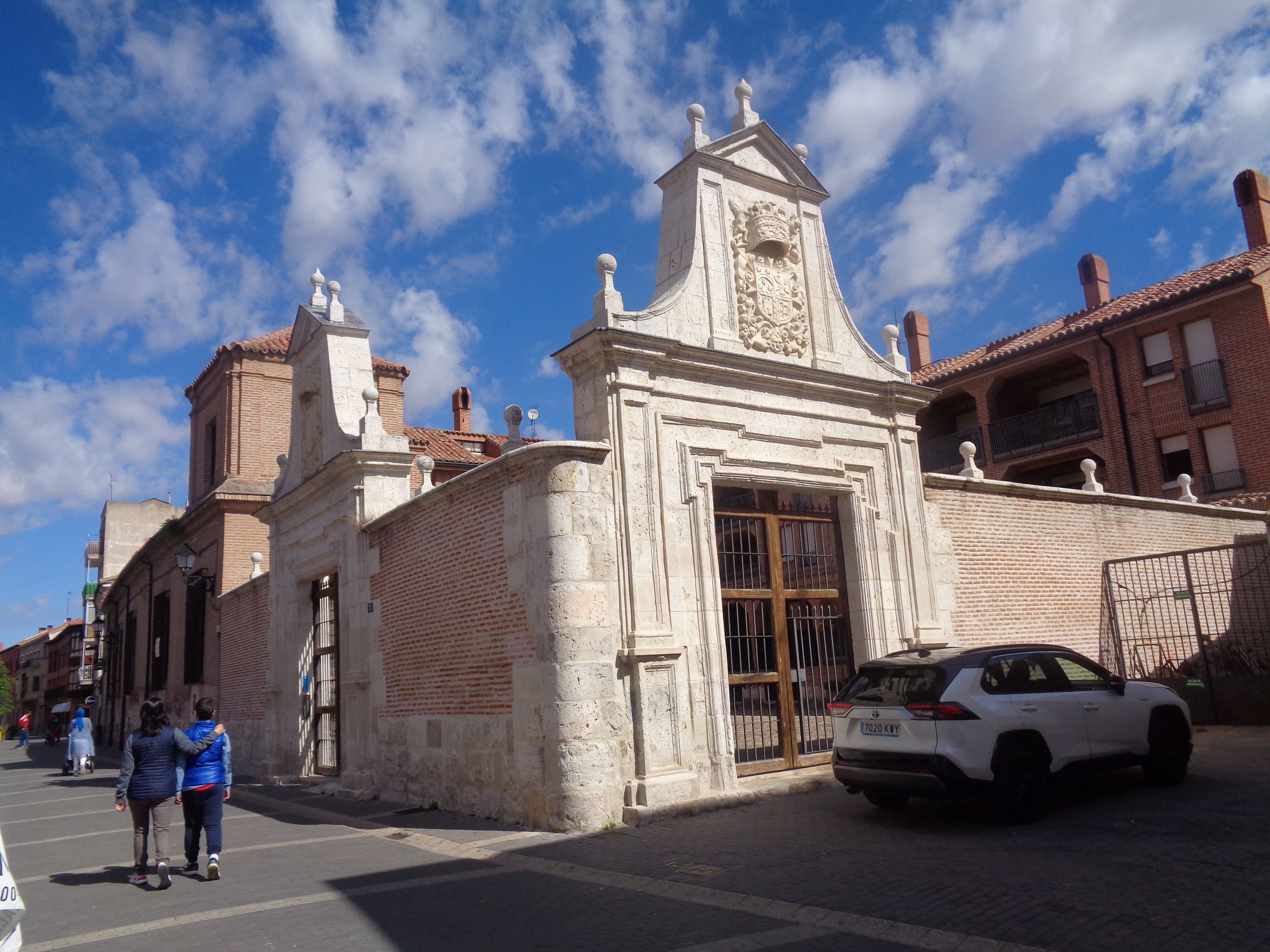
The Palacio del Marqués de Tejada, also known as the Palacio del Almirante, on Calle del Almirante no 18 is an old building raised during the 17C, on the old houses of the Admirals of Castile, by the Marquis de Tejada, The columns, capitals and shoes that are found in the archery of the walls that close the corner patio, they betray that the building is built on another oldest of the 16C. Currently, from the old building only the rooms of the parallel part to the street chaired by a square turret, the enclosure wall and the two large stone covers that maintain high the great shield of the Marqués de Tejada remain standing. The rooms open to the Calle del Almirante (Admiral) through large windows protected by wrought iron bars corresponded to the main rooms of the building, while the tower, only has a structural decoration. The covers have a decoration based on large earmuffs, pilasters that are fallen on the sides and are finished off at the upper part by crowned shields and cross loups with the weapons of the marques, surrounded by numerous symbolic and representative elements: Malta Cross, faces and two cherubs next to the tip of the shield.
The Casa del Peso is in the main square, Plaza Mayor de la Hispanidad. It is built on five elegant arches with a long balcony. It was built in the 17C to keep the Peso Real (Treasury) and guarantee the weight and official measures. (no pic)
Fitting to tell you a bit of history I like on Medina del Campo :
The city of Sarabris was founded by King Brigo, the fourth king of Spain, and began to reign at 399 years after the flood ; this city of Sarabris, some authors thinks being Medina del Campo, by the names of locations and rivers that they are in their region, After the defeat against the Romans in the skirmishes that preceded the siege of Numancia, the Romans maintained their dominance over Sarabris, although these did not break their privileges, which endured even after the Visigothic conquest. During the Visigothic domination, three events would attest to a struggle sustained by Leovigildo to dominate this population: one, to call the real one of the doors of the old wall, named for being in front of the field where the Visigoth conquerors were settled, During the 14-15C, the Castilian civil wars took place. From 1366 to 1369, the First Castilian Civil War between Pedro I de Castilla and his half brother Enrique. From 1465 to 1468, the war between Enrique IV and his half brother Alfonso. From 1475 to 1479, the Spanish War of Succession between Juana La Beltraneja and her aunt Isabel, which eventually won as Isabel I the Catholic,.
In 1491 the Catholic Monarchs arranged to be considered as the General Fair of the Kingdom. In the 16C, Medina del Campo had become one of the main financial places in Europe. On August 21, 1520, in the context of the War of the Communities, the city refused to deliver the artillery present in the city to the imperial troops of Carlos V to know that, if they were given, they would be used against Segovia. The realistic response consisted of provoking burning of several parts of the town, made known as Medina’s burning, which produced the destruction of much of the town and the definitive outbreak of the until then incipient common movement throughout the Crown of Castile In the spring of 1931 the Second Republic arrived in Medina del Campo. On April 14, 1931, being 19h, the elements of the board of directors of the republican and socialist parties of this population to whose front came the respective presidents presented in the Casa Consistorial or City hall. On July 18, 1936 ,the army of Morocco, came in and Spain would be divided into two antagonistic blocks, the civil war had begun. During the Civil War Medina del Campo was a rear area and the Simón Ruiz hospital was used to heal the injured that fought in the front
The Holy Week in Medina del Campo as in many parts of Spain is hugely important, Here it has the oldest discipline processions in Spain, established by San Vicente Ferrer in 1411, with its own characters that endure. There are many routes to discover the history of the region such as the Carlos V route, route that brings together the twenty -four Spanish towns in which Emperor Carlos V spent on his last trip to the Yuste monastery. Also, the Valladolid Castles Route, the Camino de Santiago, the Route del Camino de Levante, the Santa Teresa footprints. Pilgrimage, tourist, cultural and heritage route that brings together the seventeen cities where Santa Teresa de Jesús left her “mark” in the form of foundations
The City of Medina del Campo is well serve by roads such as the A-6 highway (also known as Autovia del Norte), communicates the city with Madrid to the south and with Galicia to the northwest. Medina del Campo is in a privileged situation from the logistic and communication point of view, since six Castilians province capitals are less than 100 km from the town. From 2016 it has a new AVE fast train station in the Madrid-Galicia line, located on the Carretera de Las Salinas road.
The city of Medina del Campo: http://www.ayto-medinadelcampo.es/
The province of Valladolid on Medina del Campo: https://www.provinciadevalladolid.com/en/-/medina-del-campo-1
The Castilla y Léon tourist office on Medina del Campo: https://www.turismocastillayleon.com/turismocyl/en/art-culture-heritage/historic-sites/medina-del-campo
There you go folks , another wonderful nostalgic, sentimental trip to my dear Spain, Medina del Campo was a pleasant surprise , nice,quant, historical I like, We will be back ,eventually, we love it !, Again, hope you enjoy this post on the curiosities of Medina del Campo !!! part I as I
And remember, happy travels, good health, and many cheers to all !!!

 Paris1972-Versailles2003