
We are back to my dear Spain again !! love it !! We came by car of course and took time to see new areas and old repeat with some of them as introduction to my sons and our dog Rex ! I came into Medina del Campo after several years and it was sublime ! I like to continue my road warrior stories this time in Medina del Campo, Therefore, here is my take on the other churches of Medina del Campo !!! Hope you enjoy the post as I,
The City of Medina del Campo is located in the province of Valladolid and the autonomous community of Castilla y Léon in the kingdom of Spain, It is 54 km from Valladolid City , 42 km from our rental house in Velliza, and 160 km from Madrid. In my walking warrior mode as usual did walked all over the city and saw many monuments and some pictures for the memories of always. These are some of the other churches we saw, nice full of history and architecture.
The Monasterio de las Carmelitas Descalzas or barefoot Carmelites. It is a closing convent belonging to the order of the barefoot Carmelites of San José, founded in the 16C, and as such cannot be visited. Actually, the facade is so austere, that if it weren’t for the poster next to the door, it would go totally unnoticed. The monastery of San José, belonging to the Order of the Barefoot Carmelites, is one of the most emblematic places of the population of Medina del Campo. This monastery is an important center of spirituality and prayer, where religious lead a contemplative life dedicated to the search for union with God. It was founded by Teresa de Jesus, one of the most important holy in the history of the Catholic Church. She was a Spanish mystique and writer who reformed the order of Carmel, founding numerous convents and monasteries of barefoot Carmelites in Spain. The monastery has a Baroque -style church, with a central nave and richly decorated side chapels with religious paintings and sculptures. of wood of great beauty. The monastery cloister stands out especially, a space of great architectural and spiritual beauty where religious can walk and meditate in peace and silence.
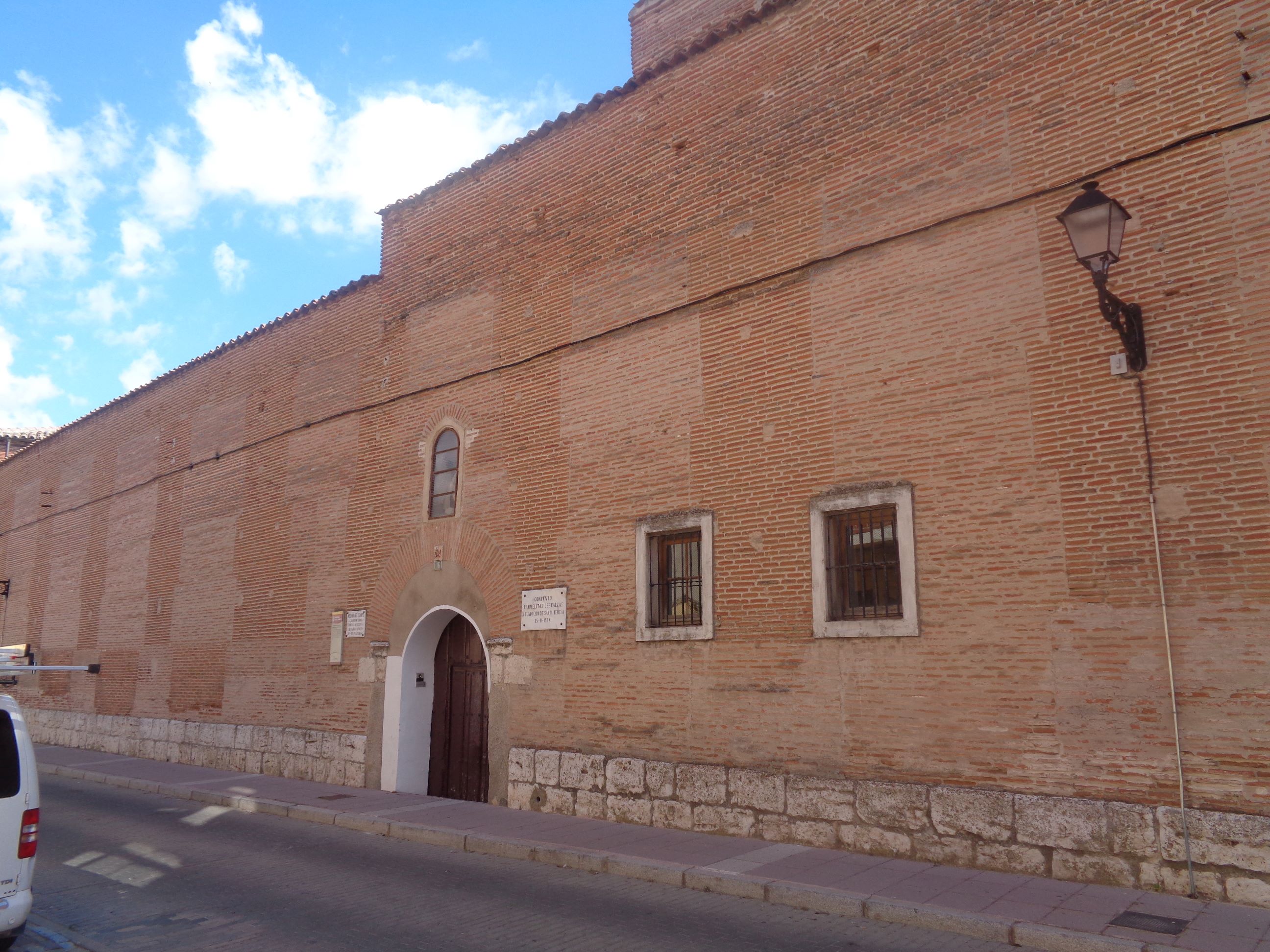
The Mass schedule on the Monasterio San Jose of the Carmelitas Descalzas: https://horariodemisas.com/valladolid/medina-del-campo/monasterio-de-san-jose-del-carmen-carmelitas-descalzas/
The Collegiate Church San Antolín is located in the Plaza Mayor de la Hispanidad, and, although the main part is characteristic of the final Gothic, the construction is complex, covering styles from the beginning of the 16C to the 18C, and even subsequent modifications, many of them due to maintenance and repair needs, The origin of this church dates back to the 12C, there are, however, remains of the first building, only documents, the oldest of which dates from 1177, the parish of “Sancto Antonino” is mentioned. The Capilla de las Angustias or Chapel of the Anguish; In addition to the sacristy, the rooms dedicated to various brotherhoods and canonies , a tower-cabin and several facades: the main one is the one that gives to the square, with its own open atrium or legend of ecclesiastical jurisdiction. The main part of the collegiate larger size and a stone facade in contrast to the rest of the church that is in brick ,which the exempt columns and several bodies with sculptural decoration stand out. The category of collegiate with free and exempt abbey was granted by Pope Sixto IV in 1480, at the request of the Catholic Monarchs, in 1851 the church was reduced to the category of major parish, losing its privileges. What the most interesting architectural element of the entire main facade is the balcony that is immediately linked to the left of the main cover. It is the open Chapel of Our Lady of the Conception or the Pópulo and its uniqueness lies in being the oldest background, still standing, of the outer or Indian chapels, so extended in the churches and cathedrals of Latin America. The Balcony found at the end of the facade in an added body, it corresponds to the one built in 1691 by the archicofradía of the Blessed Sacrament, popularly known as the canons, for being the place where they witnessed the celebrations held in the square. The tower consists of five bodies separated by slightly flown stone imposts, with an octagonal plant on which there is an iron structure, which replaces the ochavated one destroyed by a lightning in 1841. In the body of bells see the great bell Santa Barbara, founded in 1588 and popularly known as bell Mary; In the east wall there are two 1641 and 1836 bells, both dedicated to San Antolín.
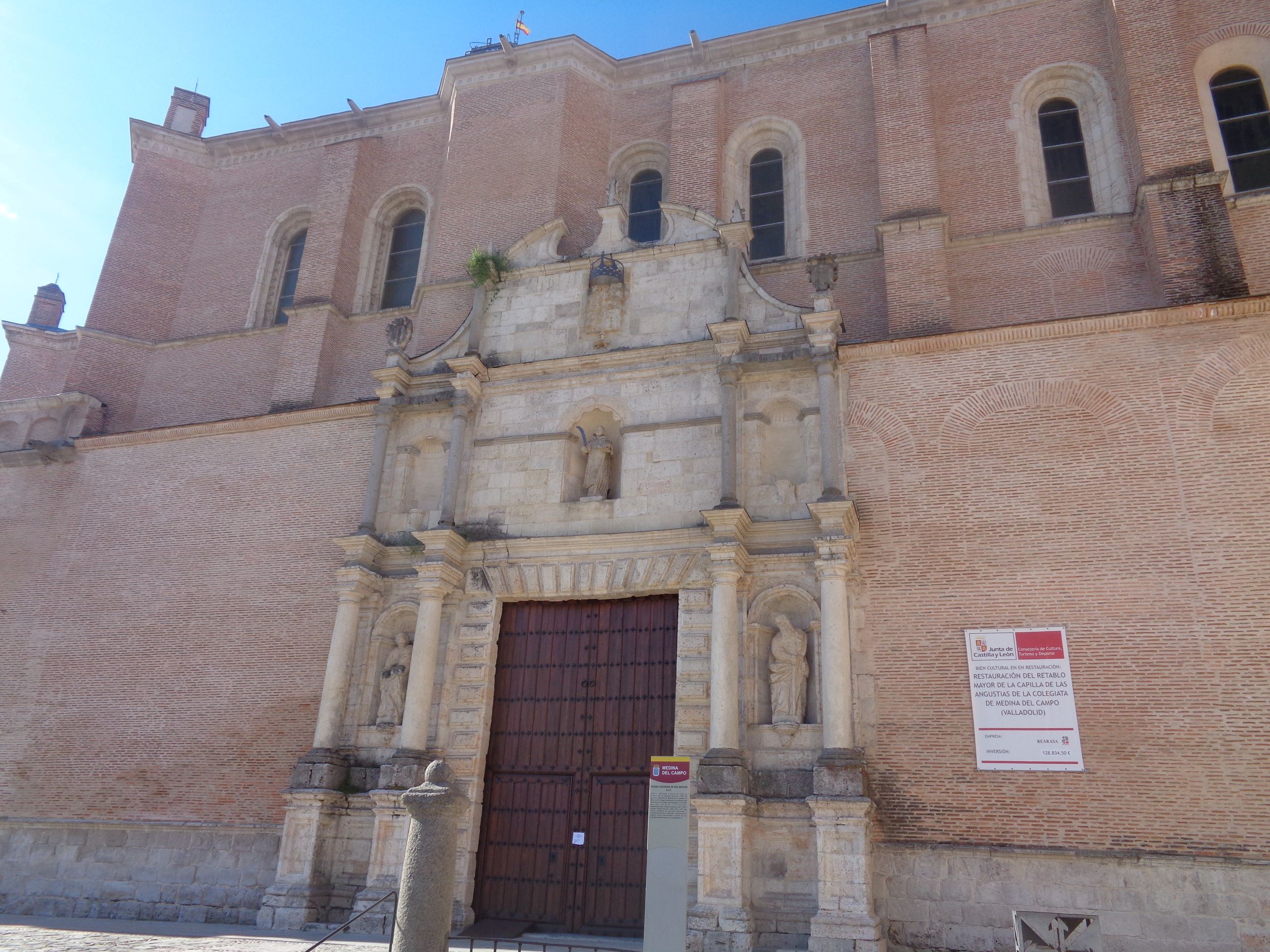
The Medina del Campo tourist office on the Church San Antolin : http://medinadelcampo.es/colegiata-de-san-antolin
The foundation of the brotherhood of Virgen de la Soledad y Alegria on the Church San Antolin : https://virgendelasoledadyalegria.es/fundacion-de-la-cofradia
The Mass schedule on the Church San Antolin : https://horariodemisas.com/valladolid/medina-del-campo/iglesia-colegiata-de-san-antolin/
The Monastery of Santa María Magdalena is a cenobium of Augustine nuns of closing The convent was founded in 1551 by Mr. Rodrigo de Dueñas, important changer and counselor of the Treasury of Emperor Carlos I, and his wife D. Catalina Cuadrado, with the double purpose of serving their church as a place of burial and welcoming within its bosom, It welcomed in their bosom girls of unreasonable life and with desires of amendment. Hence the first denominations of this establishment of the penance or of repentant, whose official patron of Santa María Magdalena is not fixed until 1700. At the request of the founder, together with the convent a school for children of poor families was built , Entitled of the Santa Doctrina, where he studied his first letters San Juan de la Cruz after his arrival in Medina del Campo. The MM Agustinas have inhabited the monastery since its foundation. The Church celebrates daily cult at 20h. My oldest son on pic below right
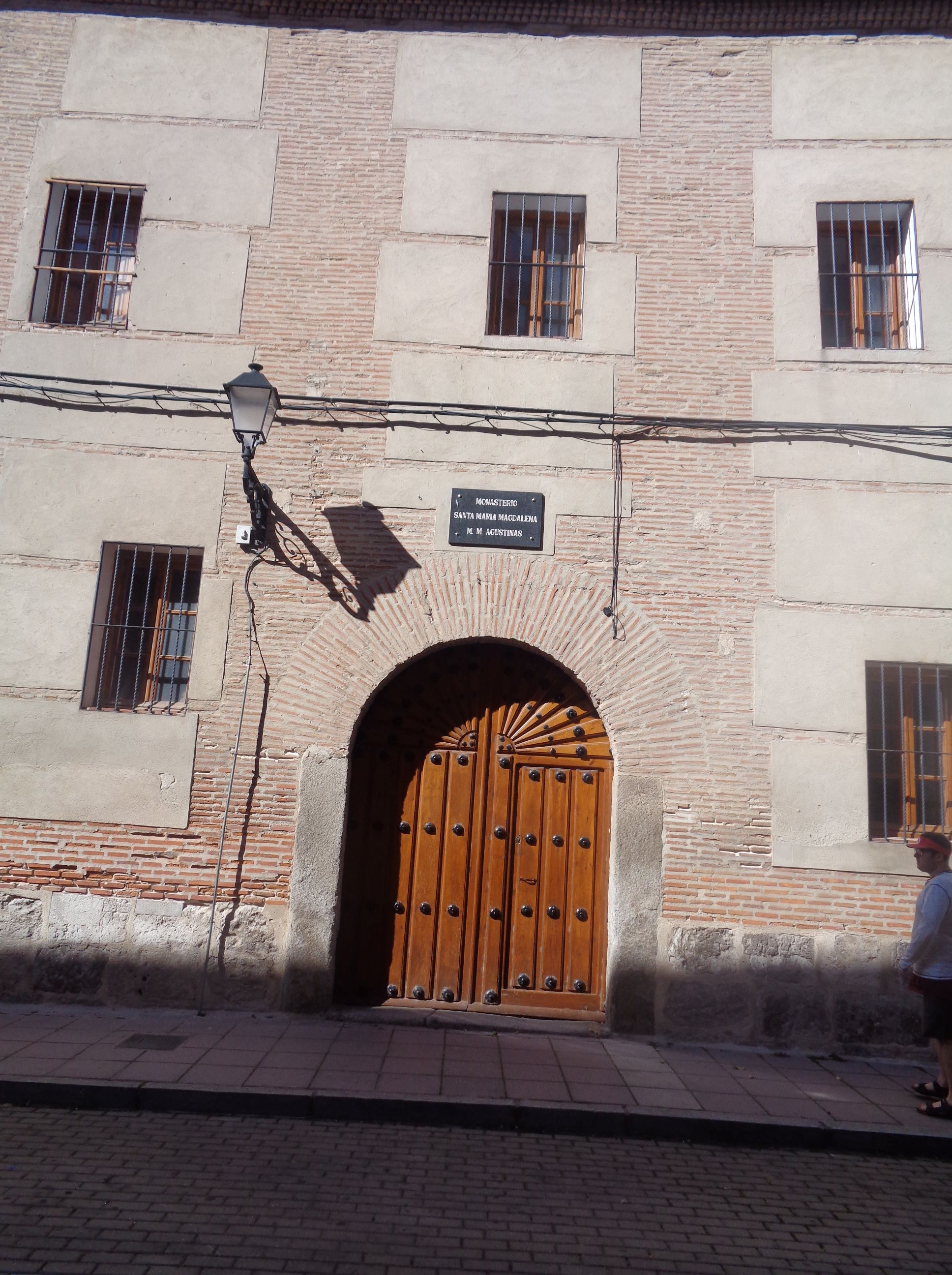
The Mass schedule of the Monastery of Santa Maria Magdalena : https://horariodemisas.com/valladolid/medina-del-campo/convento-de-santa-maria-magdalena-agustinas/
The Church of San Miguel Arcángel, located next to the Zapardiel River, constitutes one of the most prominent Medina del Campo temples. This is a 16C church,on a rectangular plant with two nerfs. There are documentary news, dated in 1177, which show that the temple that today rises next to the Zapardiel River, is the successor of another raised during the second half of the 12C. The current church was built throughout the 16C, it is known that the works of the header were carried out between 1531 and 1538, the nerf was topped in 1574 and from the last quarter of the 17C date the vaults of the nerf. The main chapel, very deep, is covered with a cruise vault. The church does not belong to any concrete architectural style, due to the various modifications it suffered during the 16-17C, The most impressive element is the altarpiece that recounts, in ten scenes, various moments of the life of Jesus Christ and the episodes of Santiago Matamoros and the imposition of the Casulla de San Ildefonso stands out. On the wall of the epistle side, next to the Rococó altarpiece dedicated to San Antonio de Padua, there is a niche with the sepulcher of Juan de Aguilar, dead in 1547. On this there is a mural painting that represents the baptism of Jesus. In the side nave, there is also an altarpiece with the sacred family. In addition, within the temple also stands out in the choir, an organ of the 18C of Baroque style, restored, which replaces the original and the collection of bells of the tower of different sizes and typologies.
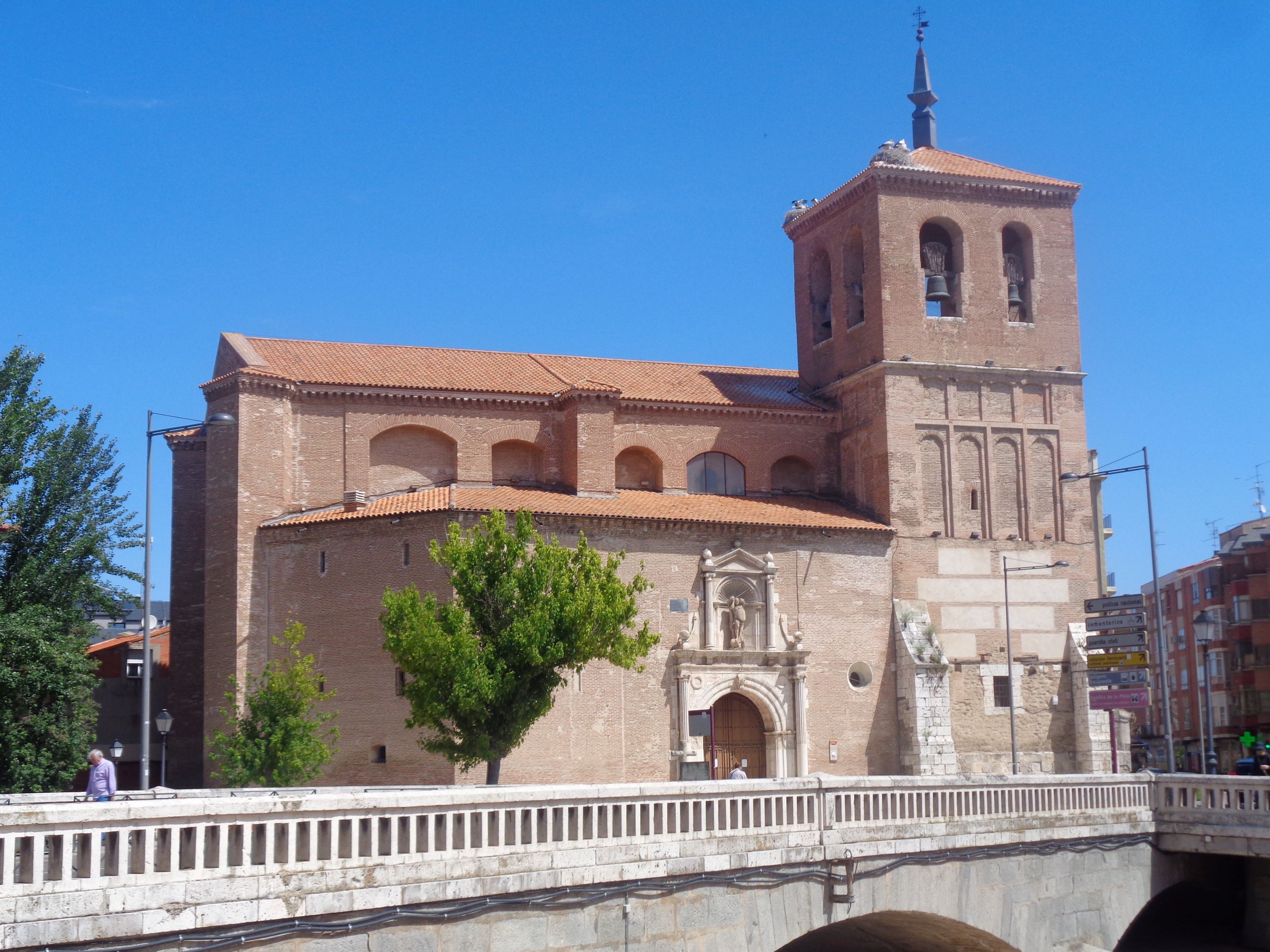
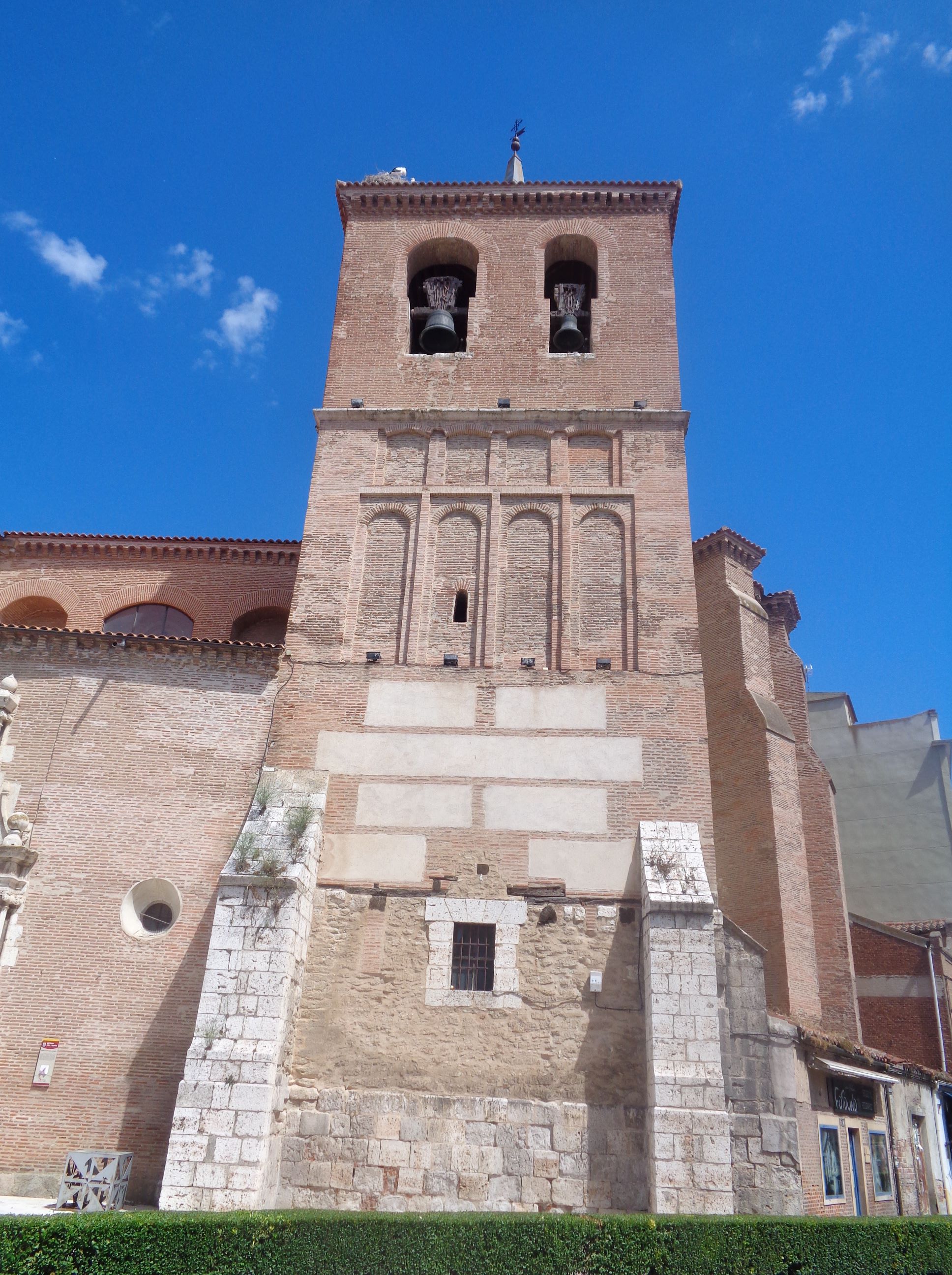
The Mass schedule of the Church San Miguel Arcangel : https://horariodemisas.com/valladolid/medina-del-campo/parroquia-de-san-miguel-arcangel/
There you go folks , another wonderful nostalgic, sentimental trip to my dear Spain, Medina del Campo was a pleasant surprise , nice,quant, historical I like, We will be back ,eventually, we love it !, Again, hope you enjoy this post on the other churches of Medina del Campo !!! as I
And remember, happy travels, good health, and many cheers to all !!!

 Paris1972-Versailles2003