
We are back to my dear Spain again !! love it !! We came by car of course and took time to see new areas and old repeat with some of them as introduction to my sons and our dog Rex ! I came into Valladolid after several years and it was sublime ! I like to continue my road warrior stories with Valladolid. Therefore, here is my take on the Church Santa Maria la Antigua of Valladolid !!! Hope you enjoy the post as I.
The City of Valladolid is in the province of Valladolid, in the Autonomous Community of Castilla y Léon, only 202 km from from Madrid. This was a find as what happened when you let your legs do the work, my walking warrior mode in town.

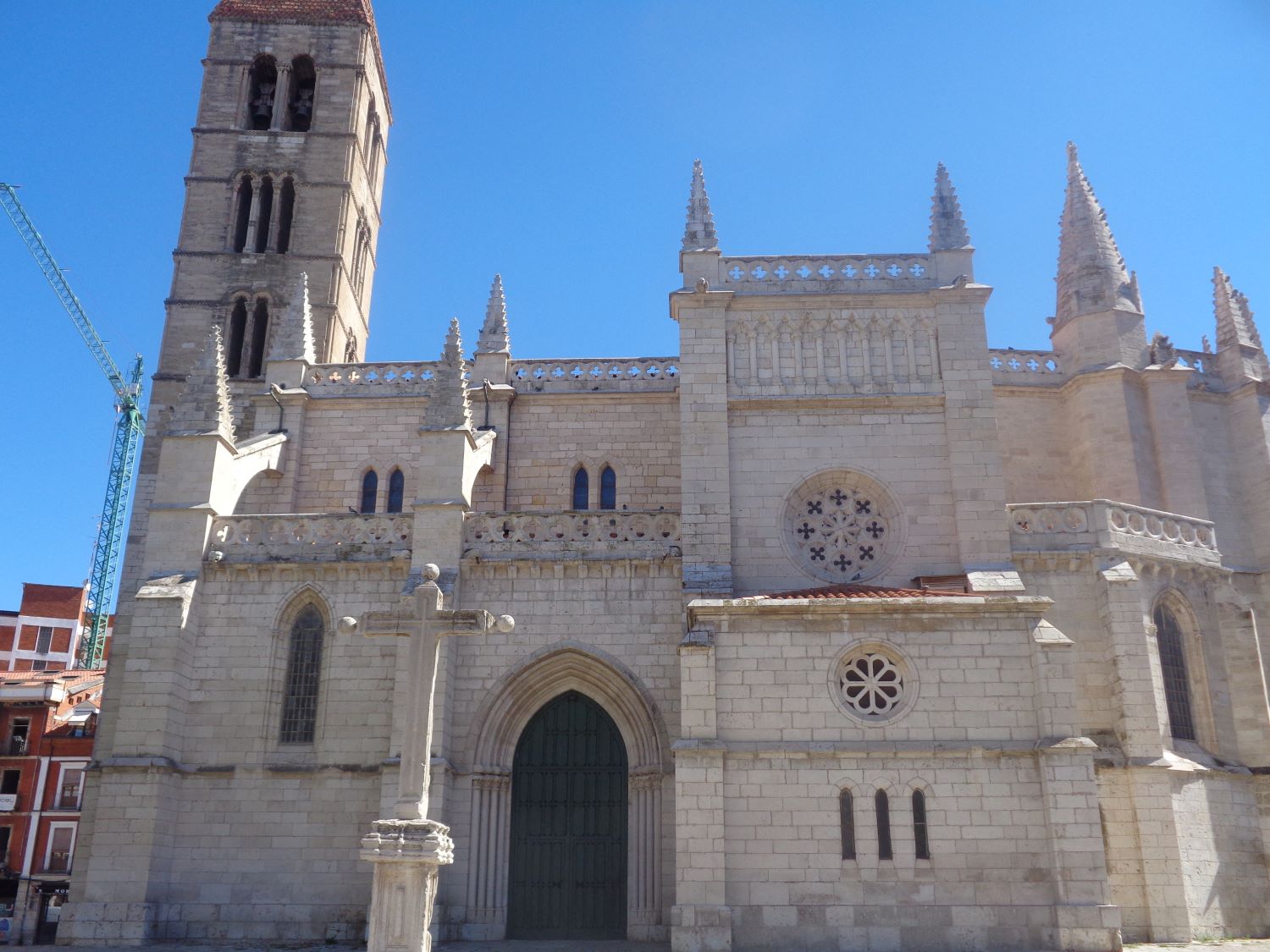
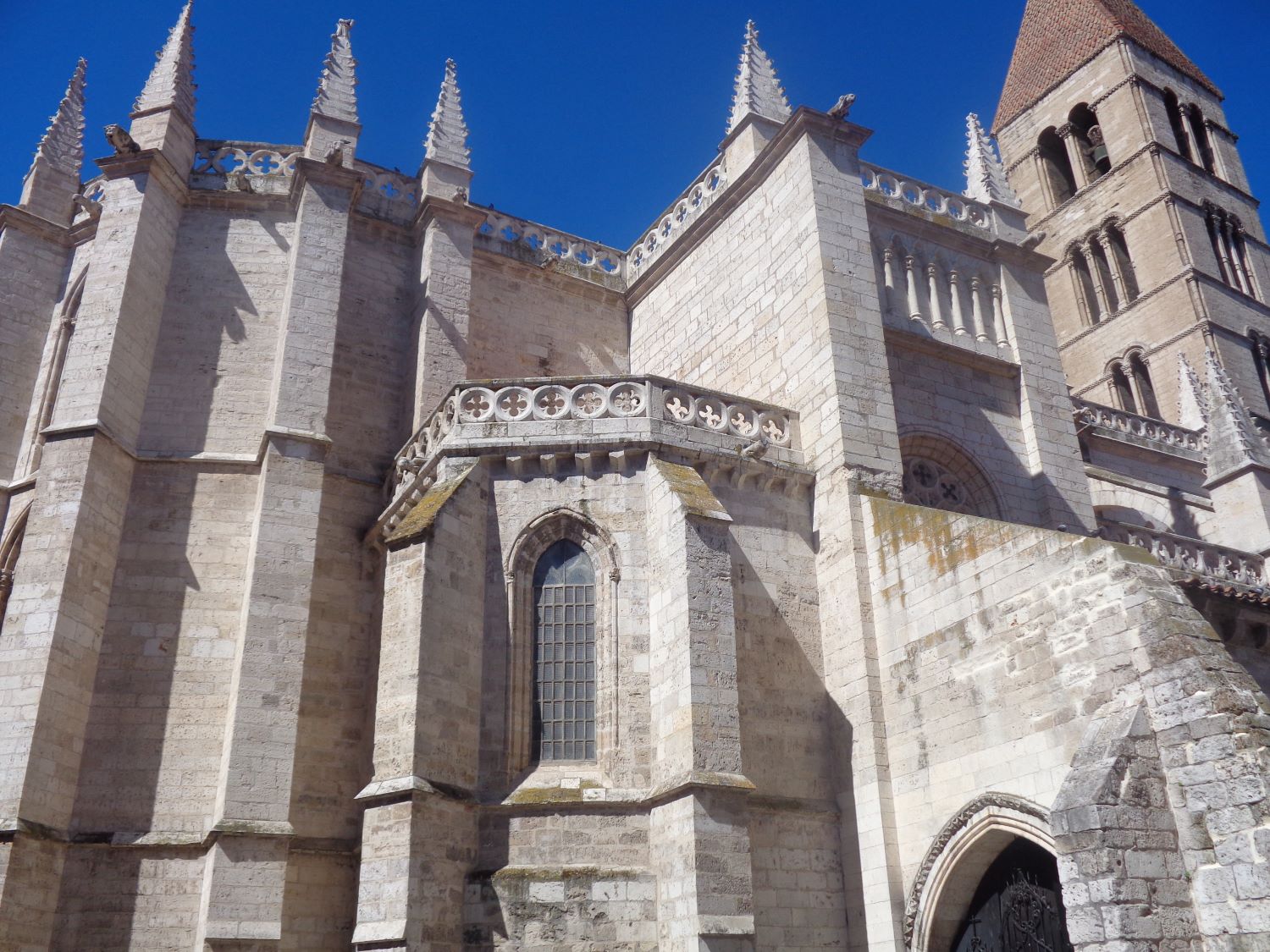
The Church of Santa María la Antigua is of Romanesque style in the front and the rest of it is Gothic and Neo-Gothic, as it rose in the 14C and, after subsequent added in different styles, was intensely restored and rebuilt in the first half of the 20C. Possibly one of the parishes with the most history in Valladolid. Under the current church, remains of Roman bathrooms have been found
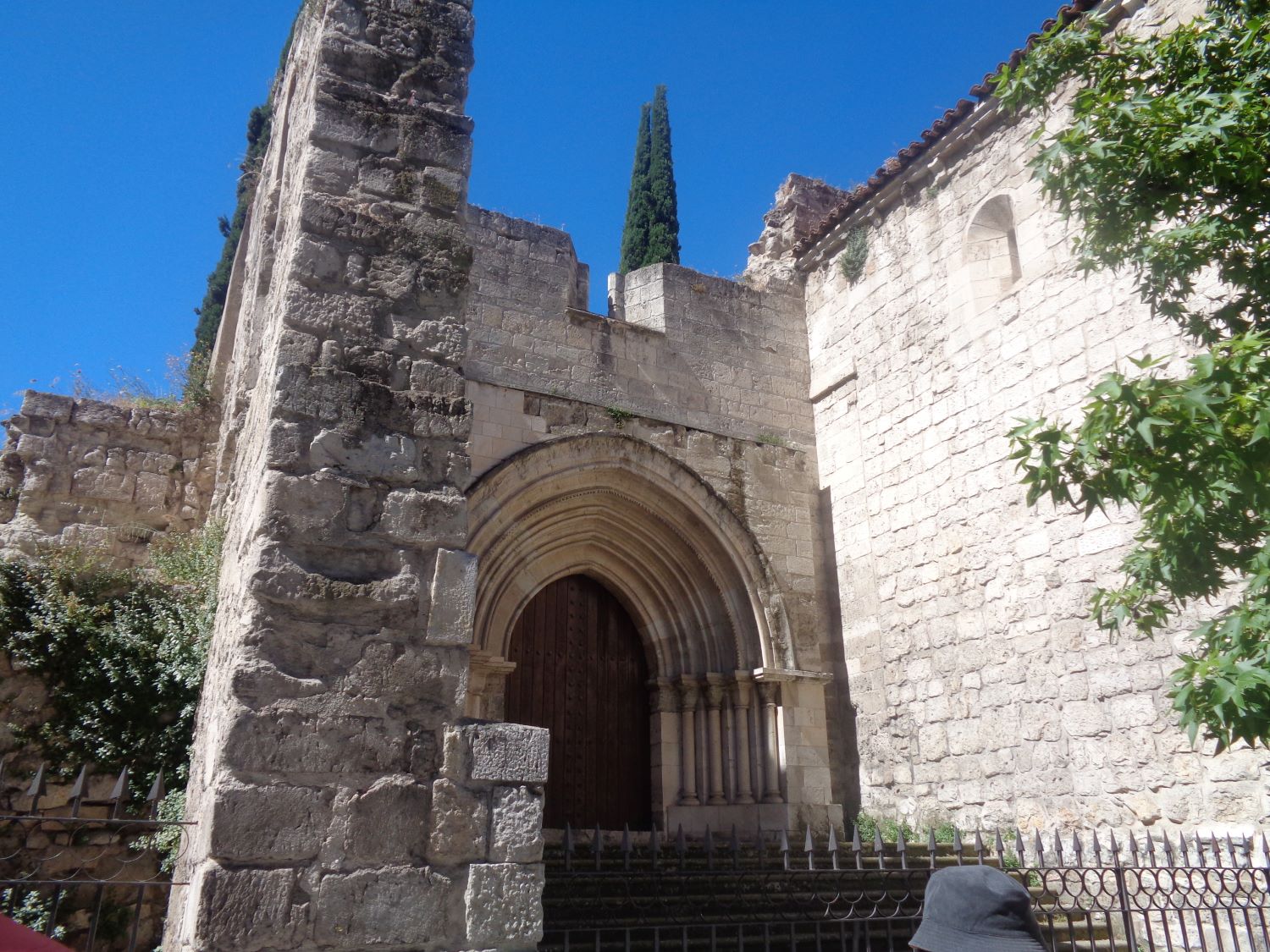
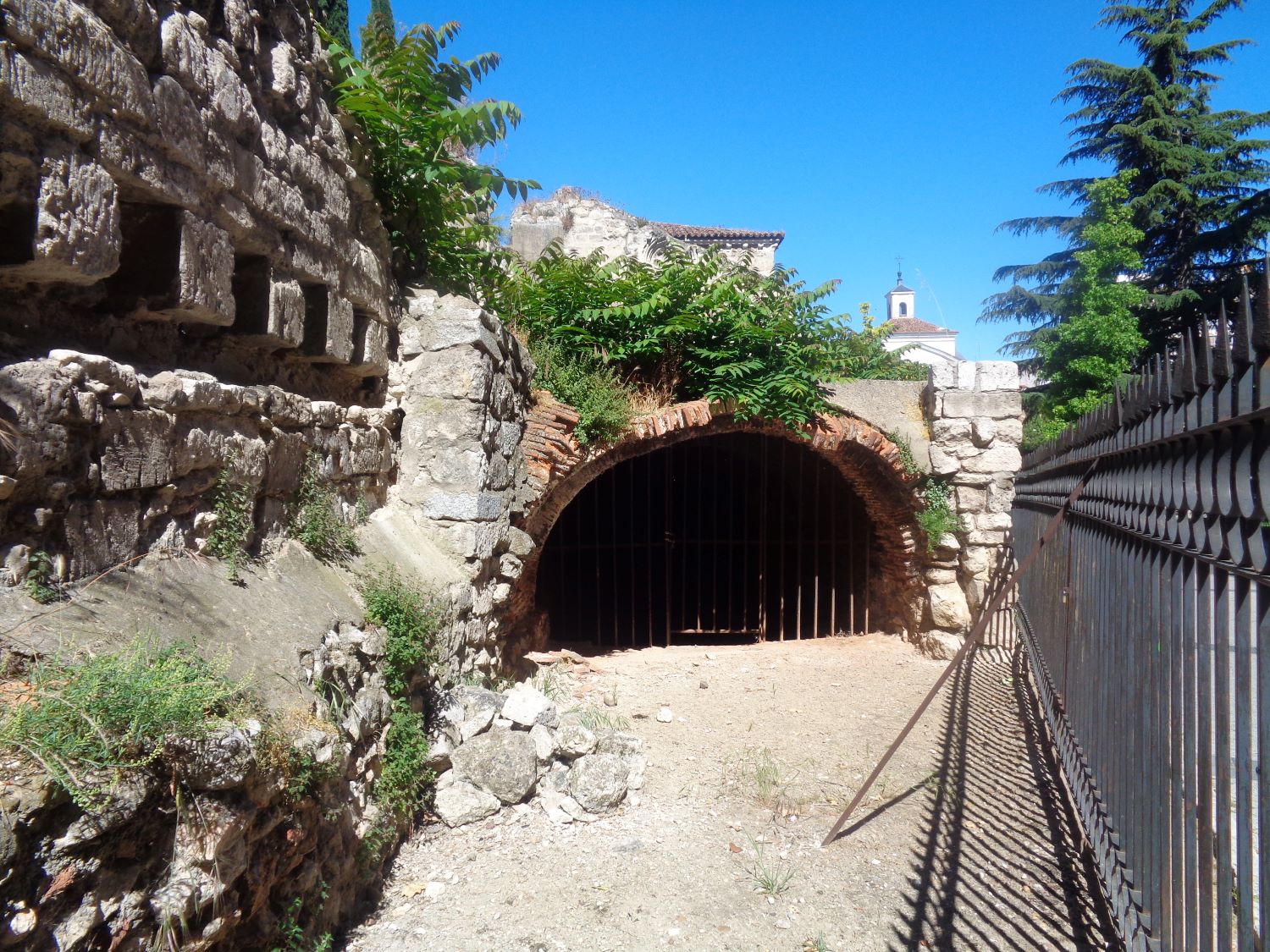
The truth is that its existence appears for the first time in the documentation in 1177. This primitive construction is not preserved. The oldest parts of the current church date from the end of the 12C, and are in a Romanesque style: the porticated gallery located north of the church, and the slender tower, located at the feet, with a square plant and four floors, with windows in the last three, auctioned with pyramidal arrow. The rest of the church was probably re done in the 14C, under the reign of Alfonso XI of Castile, following the Gothic style
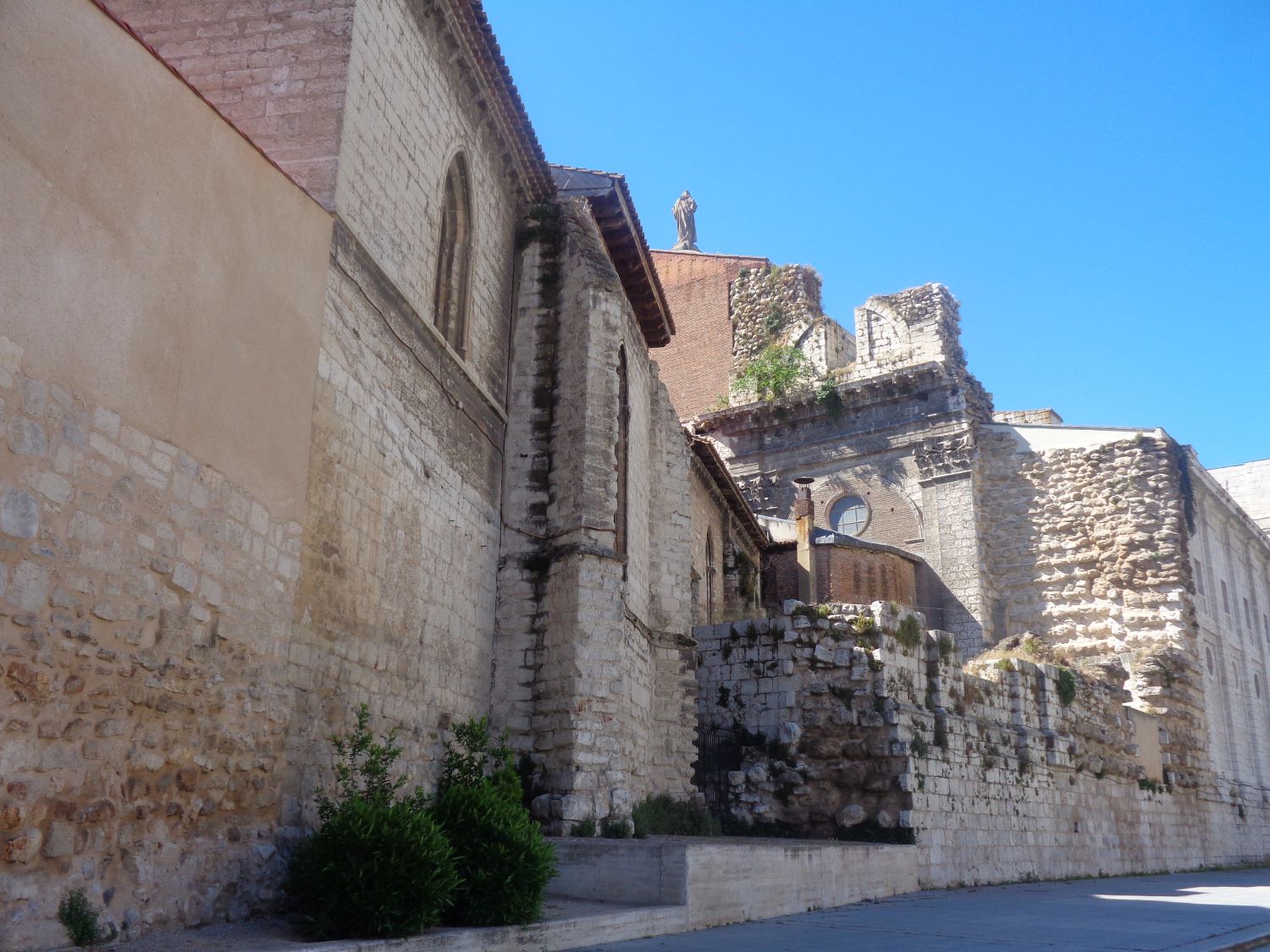
This Church Santa Maria la Antigua was organized in three nerfs, topped by three polygonal apses, without girola, and transept manifested only in the elevations and not in the lower floor. In the 16C, a major altarpiece was carried out, carved by Juan de Juni between 1550 and 1562, which masked the interior of the central apse. By 1706 the Chapel of Nuestra Señora de la Soledad y las Ánimas or Our Lady of Solitude and the souls, attached to the south side apse was added. Several Baroque -style altarpieces were settled inside during the 17-18C, contributing to masking the Gothic space more, scarcely valued during the Baroque in the high choir, The work of around 1500, there was a baroque facade organ. The church had organs since the first years of the 16C, although today it does not retain none.
As of 1912, the tower and the great wall that lined its low body was restored, proceeding to reinforce the tower with concrete, in addition to replacing ashlars, It is neo -Gothic style and tries to harmonize with the apesides of the 14C. The new church, also has a high choir, inspired by the 16C. In 1947 a neo -Gothic sacristy attached to the southern transept was made for the church service and, the following year, the porticada gallery was restored Romanesque, reinforcing its foundation and sanitizing its roof. Finally, in 1952, the church opened again to the cult. The bell tower, one of the symbols of Valladolid, is located at the foot of the church. It is an element of great magnitude, with a height close to 50 meters, the tower currently has six bells. The oldest, of 1599, is located on the north and its iconography still gothic forms. Next to it there is another one of the late 19C. The remaining bells date from 1914 less one, recast a few years ago.
The Porticada Gallery, which is located on the north side of the church, presents fourteen semicircular arches separate in three sections of five, and four arches respectively, separated by powerful buttres of influence cisterciens, The church has three nerfs of two sections, transept manifested only in elevation and header with three polygonal apses. The entrance door is in the southern wall of the side nave on the epistle side. It is from the 20C, although it is inspired by the original; It is ogival with abroading, leaving the simple archivolts on columns of simple vegetable capital. All windows show stained glass in the 20C, following old models.
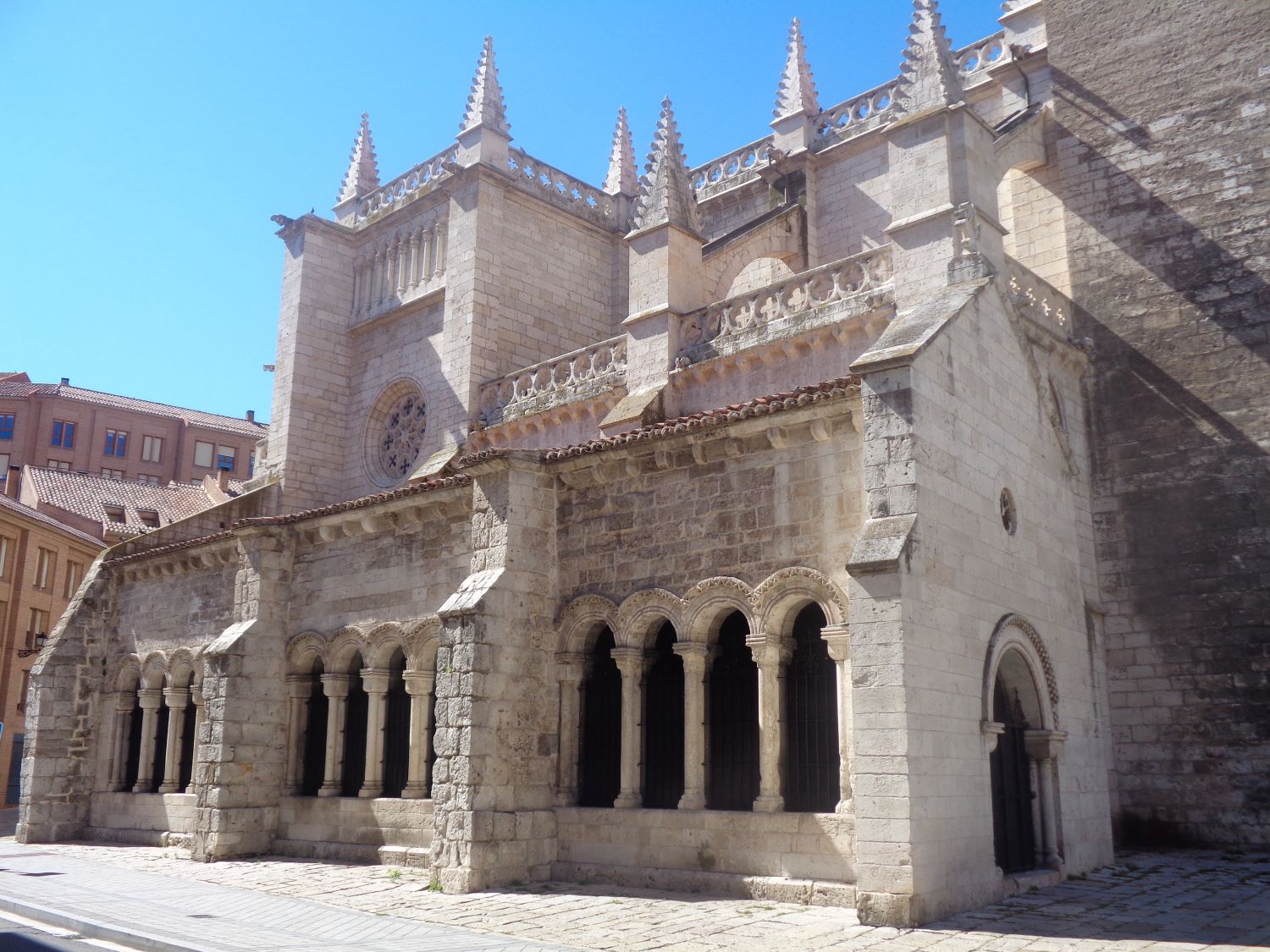
In front of the Church Santa Maria la Antigua , there is a stone cross, baroque, which indicates the center of the place that was cemetery where the poor of the parish was buried and those who died in the nearby hospital in Santa María de Esgueva, Nowadays the church is stripped of many of the works of furniture that contained, due to the criteria of the restorative style unity, and shows inside and outside its naked Romanesque and fundamentally Gothic and neo -Gothic architecture. There are only two small altarpieces, located at the foot of the side halls, dedicated to San Roque , Baroque, 17C, and to Our Lady of Los Angeles, eclectic, from the beginning of the 20C, the latter topped laterally by two canvases representing San Francisco de Paula and Santiago the Minor.
The City of Valladolid on the Church Santa Maria la Antigua : https://www.valladolid.es/fr/servicios/galeria-multimedia/galeria-fotografica/monumentos/iglesia-santa-maria-antigua
The Valladolid tourist office on the Church Santa Maria la Antigua: https://www.info.valladolid.es/en/detalle-monumento/-/asset_publisher/YazOkPDbnVzD/content/lugares-monumentos-antigua
There you go folks , another wonderful nostalgic, sentimental trip to my dear Spain, Valladolid is nice, awesome will say back after so many years it seems all for the first time, and love it ! We will be back, eventually, Again, hope you enjoy this post on the Church Santa Maria la Antigua of Valladolid !!! as I
And remember, happy travels, good health, and many cheers to all !!!

 Paris1972-Versailles2003