
I am on a nostalgic run, and found me older personal pictures that should be in my blog, I think of my Florida. I have mentioned it briefly in previous posts but rather do one in one post. By the way, the town of Port Orange is part of the Deltona-Daytona Beach-Ormond Beach metropolitan area , and about 17 miles (28 km) from my former home there. Therefore, here is my take on the Dunlawaton Sugar Mill of Port Orange !! Hope you enjoy it as I.
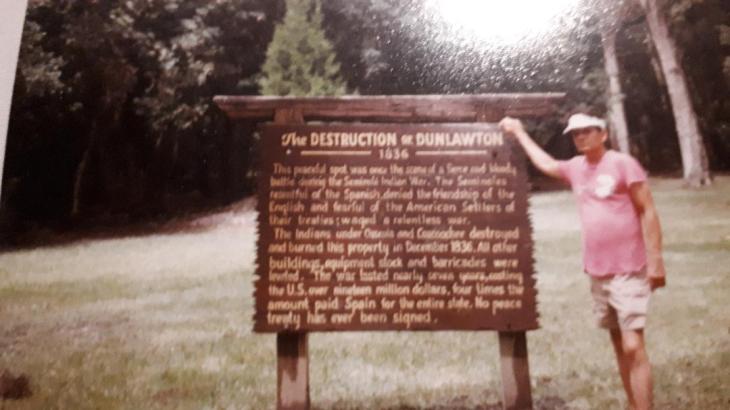
The Dunlawton Sugar Mill Gardens located at 950 Old Sugar Mill Rd, off Nova Rd, Port Orange,and about 7,5 miles (12,5 km) from the DAB airport, is a botanical garden developed and maintained by the Botanical Gardens of Volusia Inc., a nonprofit organization with no salaried employees. It features a 19C sugar factory; part of the former Dunlawton Plantation.The property was donated in 1963 to the County of Volusia by J. Saxton Lloyd and operated since April 1988 by the non-profit Botanical Gardens of Volusia Inc. On August 28, 1973, the site was added to the United States National Register of Historic Places under the title of Dunlawton Plantation-Sugar Mill Ruins. Why this brings memory, well did my Univ studies in Daytona Beach, and came back to live in Ormond Beach or county land Ormond by the Sea, Volusia County, While in my in and outs in the area came to visit it as nearby we did car runs with the dudes ! And saw it nice like it, When my parents came down took them here too, and later married to my Frenchie Martine took her too, eventually came in with my sons and all, Its a family spot really nice, peaceful and full of history of the real Florida !! Memories forever indeed. In the pic my dear Dad Elio.RIP
The Dunlawton Sugar Mill Gardens feature lovely public gardens under ancient live oaks, towering palms and other semi-tropical trees. The ruins of the planation’s sugar mill have been preserved as a historical exhibit. And, the best part of the entire experience is that it’s free. And don’t miss the sugar mill ruins, the human sun dial, children’s garden and Florida-shaped herb garden. In 1988 a local nursery owner name Martin Wibold took interest and built a garden paradise amongst the old mill ruins, dinosaurs, and 200-year-old oak trees. Luckily Dunlawton Sugar Mill Gardens is going strong, and we hope its 1988 status as a garden paradise continues for many years to come. The native butterfly plants, like Firespike, Firebush, and Blue Porterweed brought a host of butterfly friends before we even entered the gate. The Gardeners Library contains over 200 books about plants. pulling a brochure out of the handpainted mailbox, sitting a spell to read from the numerous little free libraries, and seeing the mini water wheel spinning in the bog garden. All of these interesting details are scattered throughout, hanging out next to spectacular Birds of Paradise, Heliconias, Staghorn Ferns, Banana plants, and many more. Guided tours of the gardens are available by appointment.Not just to explore the gardens but to experience local history as well.
A bit of history I like tells us that the Dunlawton Plantation and its sugar milldate to the latter years of the Second Spanish period in Florida. In August 1804, Patrick Dean, a merchant from the Bahamas, and his uncle John Bunch, a planter from Nassau, were granted by the Spanish Crown land in Florida that had been part of the British Turnbull grant of 1777. Dean established a 995-acre indigo and sugarcane plantation in what is now the Port Orange area, using the labor of enslaved Africans to cultivate and process the crops. Dean apparently was killed by a renegade Indian or slave during theFirst Seminole War in 1818, and left the plantation to his aunt Cecily, the wife of his uncle John Bunch, who had set up his own plantation on the grant to the north of Dean’s property. Cecily died soon after Dean, and the plantation passed to John Bunch, who operated the two properties until 1830 as a single plantation ,It continue processing sugar, molasses and rum on the property until December 1835, when the Second Seminole Indian War began. On the night of December 24, 1835, the Seminoles began their depredations against the plantations south of St. Augustine, and during the next several weeks, the marauding Indians burned or ransacked sixteen plantations, including Dunlawton. By early February, the Seminoles had succeeded in forcing the white settlers to abandon most of the territory south of St. Augustine In 1846 ,new owners tried to bring up to speed the plantation but the collapse of the sugar market caused the sale of the property again ,and the property changed hands several times in the following years, being used for various purposes.
During the American Civil War, the kettles for boiling cane juice were used by the Confederates for salt-making. A Confederate reconnaissance patrol called the St. John Rangers made their headquarters at the Dunlawton millhouse, hitching their horses and camping under a large live oak now called the “Confederate Oak The plantation was sold again in 1871 wit the new owners not showing any interest in agriculture, and the mill was never operated again The remains of the sugar mill include the ruins of coquina block and brick structures, and an assortment of sugar processing equipment including the gear mechanisms of the rolling sugar cane press, the iron boiling kettles, and the steam furnace and piston mechanisms used in operating the cane press. This assembly is one of the earliest extant examples in the United States of the machinery required to produce sugar, molasses, and rum.
In 1948,the Dunlawton plantation opened one of the first theme-parks in Florida, Bongoland, named after Bongo, a trained baboon kept in captivity there. The new attraction was advertised to tourists traveling south on U.S. Highway 1, but it proved to be short-lived, operating only from 1948 to 1952. A miniature train carried visitors past life-sized statues of so-called “prehistoric monsters” dinosaurs fashioned out of chicken wire and concrete. Among the five statues still existing are a Triceratops, a Stegosaurus, a Tyrannosaurus Rex, a Dimetrodon, and a Giant Ground Sloth added later. According to a 1991 article in the Orlando Sentinel (newspaper), a Seminole family lived on the grounds for two years in a chickee, or outdoor shelter with a thatched roof and open sides. In 1963,the then owners landscaped the site, retaining the dinosaurs, and donated it to Volusia County.
The official Dunlawton Sugar Mill : https://www.dunlawtonsugarmillgardens.org/
The Volusia County on the Dunlawaton Sugar Mill : https://www.volusia.org/services/community-services/parks-recreation-and-culture/parks-and-trails/park-facilities-and-locations/historical-parks/sugar-mill-gardens.stml
What is availableon the Daytona Beach tourist office on Dunlawton : https://www.daytonabeach.com/listings/dunlawton-sugar-mill-gardens/935/
There you go folks, I feel much better to have given the full credit it deserves to this wonderful spot in my life. I say the real Florida most folks don’t come to see and they should, As said, many wonderful memories of visiting and bringing the French family over , not to ever forget. This area was the last touch of Americana for us and will always be remembered fondly. Again, hope you enjoy the post on the Dunlawaton Sugar Mill of Port Orange !! as I.
And remember, happy travels, good health, and many cheers to all !!!

 Paris1972-Versailles2003