
I will tell you again more on this wonderful monument of my dear Madrid that was very near my old home while living in the City, I was submerge into the history by my grandparents , and now able to see first hand and it was sublime. Over my time there was able to come several times with friends of workers at the bullring and it was spectacular! Somehow it has stayed with me and passed by it every time in Madrid even doing lunch around it with my family. The Las Ventas Monumental bullring of Madrid, part II !!! is awesome! Again, let met tell you a bit more of it. Hope you enjoy it as I

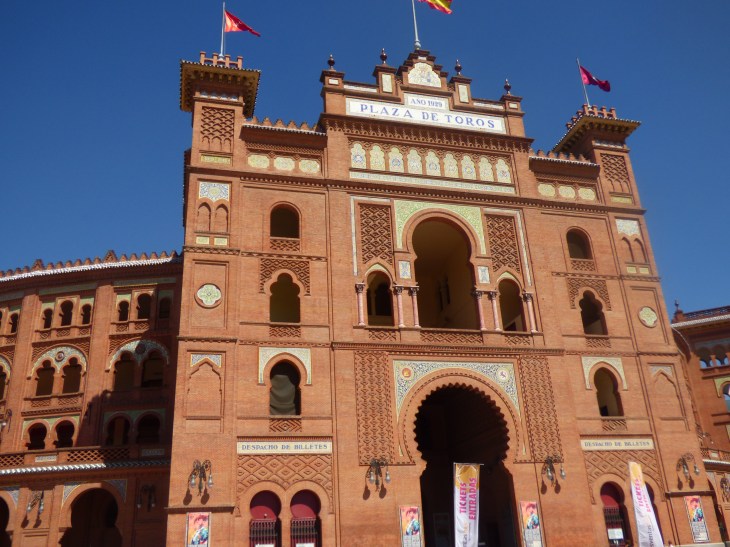
I have plenty of history on my other post on the bullring so just recap here will tell you again the inaugural poster dates back to 1931. A replica is found in the Puerta Grande ( big entrance gate). On that occasion, eight matadors took part in the first bullfight of Las Ventas on June 16. However, the official opening was in 1934. Their biggest event corrida is durint the San Isidro Fair coinciding with the patron’s Saint day. The festivities run from early May to May 15 each year,
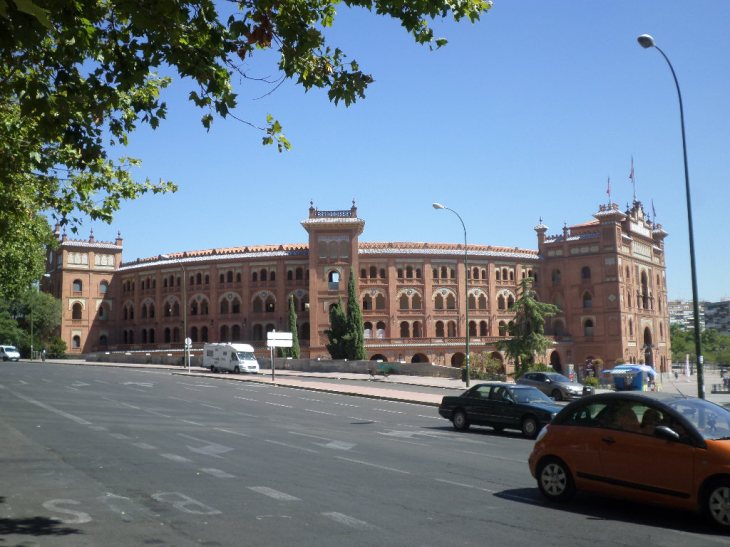
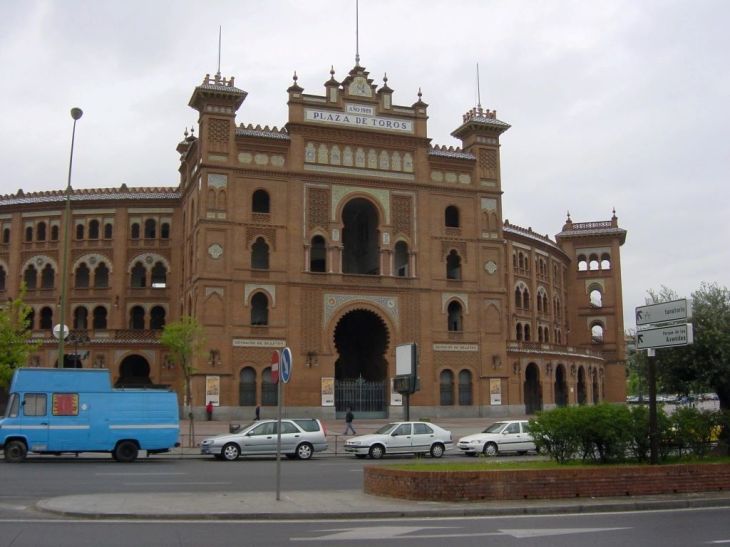
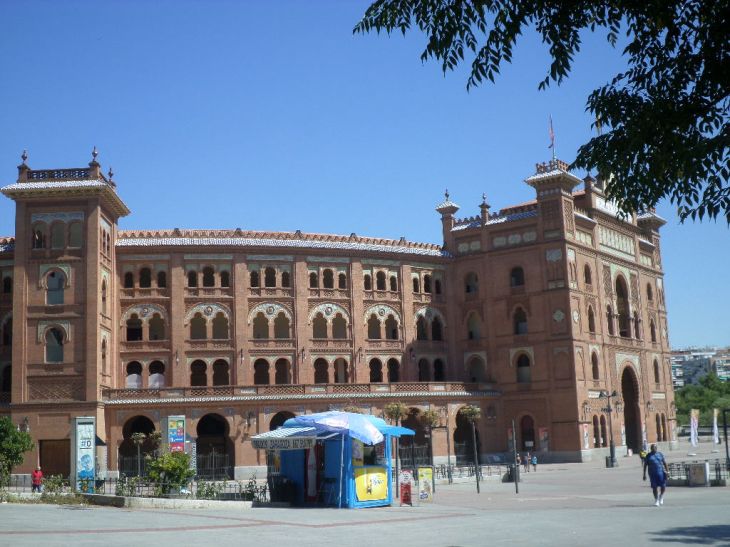
The Monumental Ventas bullring dimensions are impressive: the ruedo (the track) is 60 meters in diameter and the corridor that surrounds it, called the callejón, is 2.2 meters wide. It can accommodate precisely 23,798 people, making it the largest arena in Spain (by capacity and size), and the 3rd largest worldwide. Las Ventas is the name given to the bullring in Madrid because it was called the area in which it is located ,the neighborhood of Ventas and in the district of Ciudad Lineal (same as mine). It was built in Neo-mudéjar style, with metal structure and brick façade. The locations are distributed in 10 lines, grouped into three zones: shadow zone, consisting of lines 9, 10, 1 and 2; sun zone, consisting of lines 4, 5, 6 and 7; zone of sun and shade, composed of lines 3 and 8. These lines are divided in turn into locations of high and low lines, stands and barrage. The most expensive and the cheapest are the shadow entrances, the price decreases as they move away from the ring. The building consists of four floors, with circular galleries that lead to the different locations.
There is also a nice ,and informative Museo Taurino or Bullfighting Museum at the back, inaugurated on May 15, 1951 coinciding with the festival of San Isidro Labrador, patron of the city. Located in the Patio de Caballos offers its visitors a coherent and attractive set of bullfighting history and its relevance in the history of Spain and its culture. Indeed for those confused it should be visited, and for the lovers is a must. The museum has a chapel dedicated to the patron saints of Mexico (the Virgin of Guadalupe) and Madrid (the Virgin of Paloma), as well as an infirmary with two state-of-the-art operating rooms to treat wounds. immediately. In addition, it has three cultural rooms: the Antonio Bienvenida Room, the Antoñete Room and the Cossío Room, which also houses a library with more than 2,000 volumes. In them ,exhibitions and informative acts take place throughout the season.
The Official Las Ventas bullring : https://www.las-ventas.com/
The Official Las Ventas bullring tours guided visits : https://lasventastour.com/
The Madrid tourist office on the museum : https://www.esmadrid.com/en/tourist-information/bullfighting-museum
The Madrid tourist office on the bullring : https://www.esmadrid.com/en/tourist-information/ventas-bullring
The Monumental Las Ventas bullring is an integral part of Spanish culture ,and Madrid history. This mythical place is an essential part of a visit to the city, whatever your opinion of bullfighting. There you go folks, another dandy and we love it !! Again, hope you enjoy this post on the Las Ventas Monumental bullring of Madrid, part II !!! as I
And remember, happy travels, good health, and many cheers to all !!!

 Paris1972-Versailles2003