
Here comes something somptueuse and wonderful with beautiful things to see and plenty of architecture and history I like. I have written before on the Palacio Real or Royal Palace of Madrid, but just recently came back and these are new pictures. Therefore, here is my take on the Palacio Real of Madrid,part IV !!! Hope you enjoy the post as I.


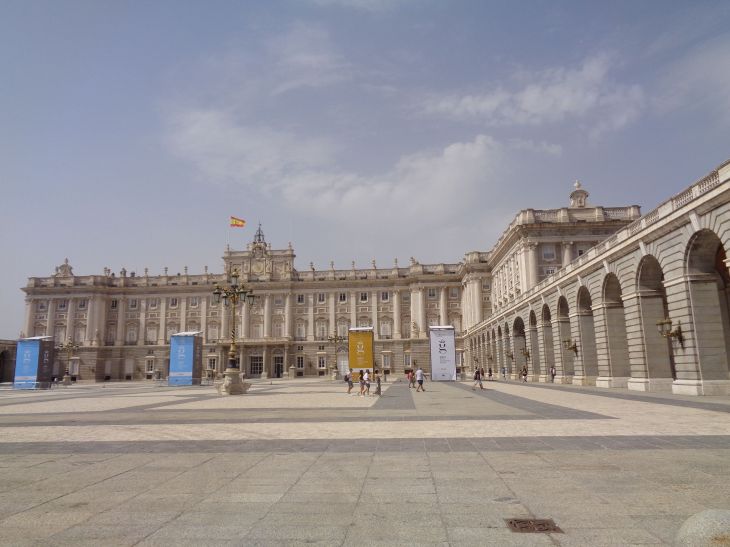
The Palacio Real or Royal Palace is the official residence of the King of Spain. The present king do not reside within it, but rather at the palace of Zarzuela. The Royal Palace is used for protocol functions, and they are own and maintain by the Spanish government. The palace is bordered on the east by the Plaza de Oriente, from which it is separated by the Calle de Bailén. In the south finally, a huge square, called the Plaza de la Armeria, is surrounded by the wings of the palace with at the south of this square is the Cathedral of Almudena. (see posts).
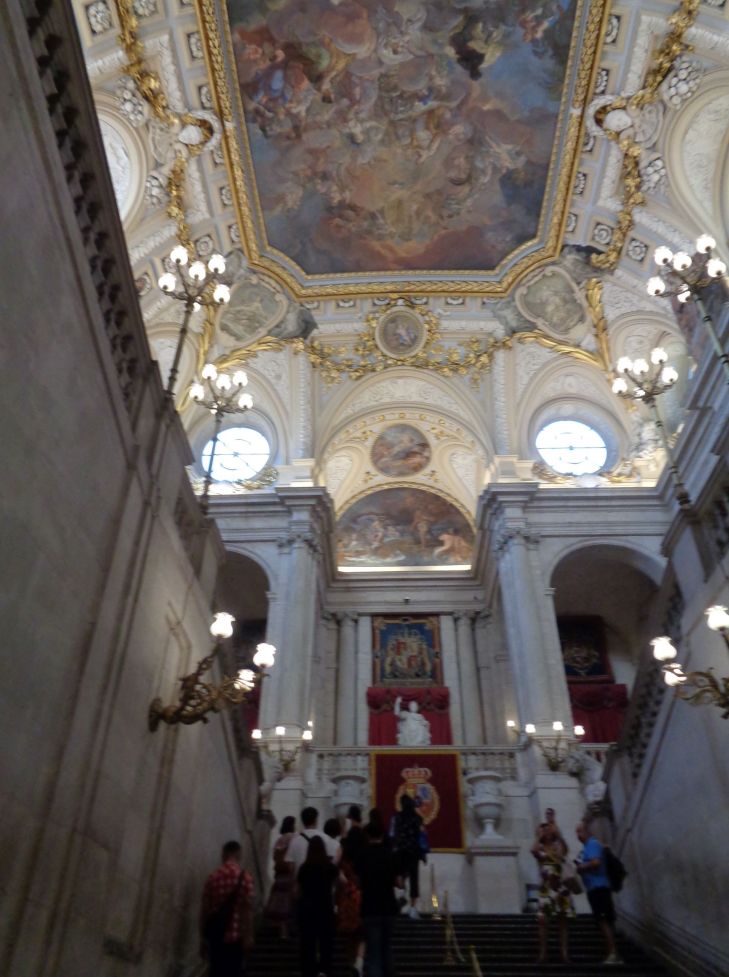

The Royal Palace of Madrid is the former home of Spanish royalty. The first king to settle there was Charles III in 1764, He was also the first to take charge of the interior decoration. His successors made changes. The most important are the work of Charles VI who had the Hall of Mirrors added or even Ferdinand VII who worked a lot on the decoration. The last monarch was Alfonso XII and Manuel Azaña, president of the Second Republic of Spain, also lived in it, occupying the rooms occupied by Queen Marie-Christine and being, therefore, the last head of state to do it. It occupies an area of 13 hectares. The floor plan of the building is almost square, with facades of up to 150 meters, with a single large central courtyard. Throughout its 50,000 square meters, we find 870 windows, 240 balconies and 44 stairs. Total surfaces are 135,000 m2, with facades 131 meters on each side and 33 meters high and a height of six floors.
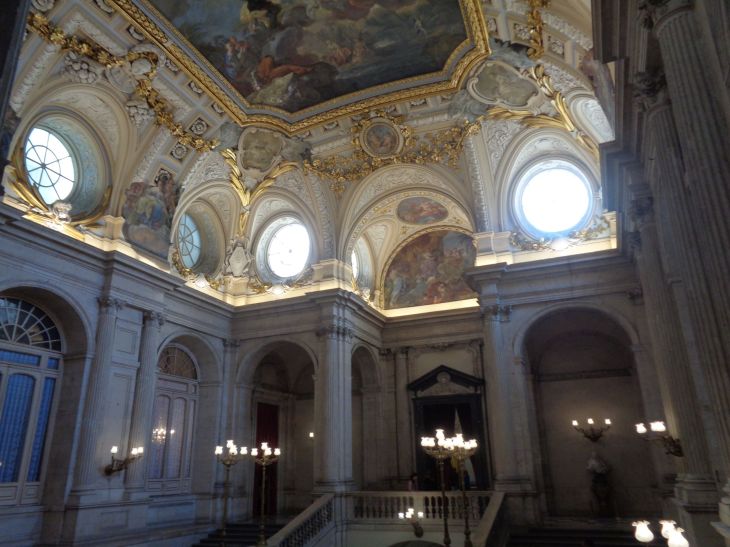
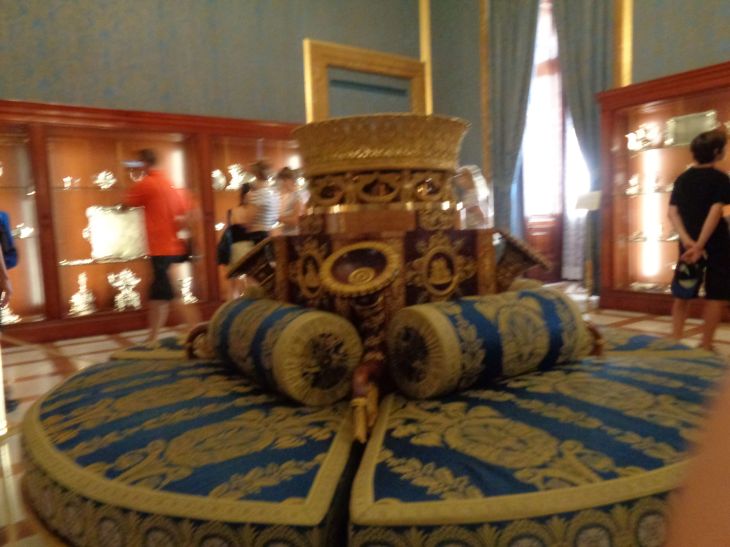
Built in 1738 on the ruins of an old royal alcazar destroyed in a fire. The Palacio Real de Madrid is one of the largest royal palaces in Europe with its 135,000 m2. The architecture of this residence was inspired by that of the Louvre. It includes a courtyard surrounded by buildings as well as a place d’Armes. The current palace was built on the ruins of an old castle which dated from the emir Mohamed I (i.e. in the 9C). At that time, Madrid was not yet the capital of Spain. This construction served to protect Toledo against the advance of the Christians. It was not until the 14C that the first kings of Castile began to use this building, then called Antigua Alcazar. The construction lasted 7 years. The Royal Palace of Madrid is a mixture of Baroque and Neoclassical architecture styles. Popular during the 17-18C
The most significant elements in my opinion of the Royal Palace are: the Salón del Trono (throne room), also known as the Salón del Besamanos (kiss hands salon), where the allegiance ceremonies to the king took place. The courtyard and the Puerta del Príncipe or Prince’s gate. The area of Carlos III ( Charles III). The Salon de los Espejos or (Hall of Mirrors). The Salon de las Columnas (Hall of Columns). The Salon de Alabarderos (Hall of Halberdiers), The Saleta de Porcelana (Hall of Porcelain), the Capilla Real (Royal Chapel and the Real Armeria (Royal Armory).

The Royal Palace houses a select collection of paintings, with important works such as the “Polyptych of Isabella I the Catholic”, the work of Juan de Flandes, “Salomé with the head of the Baptist” painted by Caravaggio, a “Horse” by Velázquez or various paintings by Goya; Important musical instruments are also exhibited, such as the quartet made for the King of Spain by Stradivarius and the extremely important collection of the Royal Armory, considered one of the most important collections of its kind. It preserves arms and armor belonging to the kings of Spain and other members of the Royal Family, since the 13C.

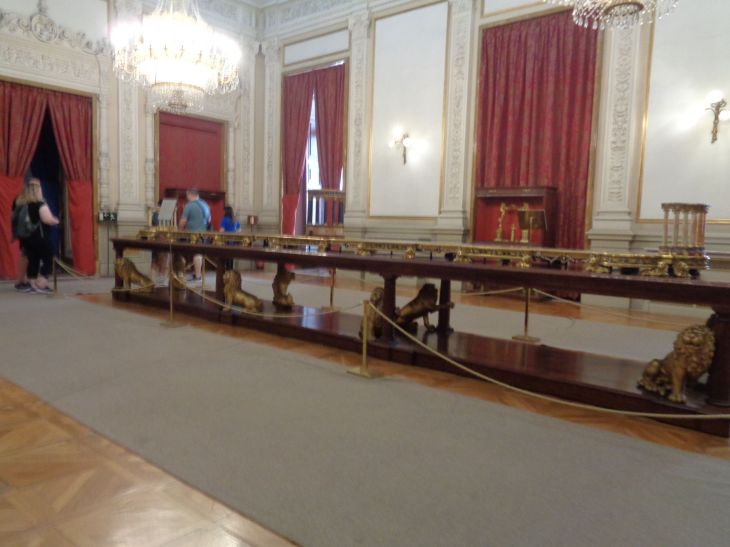
The current Palacio Real has 3418 rooms, and 800 bathrooms! Some places deserve special attention such as: The majestic main staircase with its 70 steps, created by Sabatini; The Royal Chapel and its collection of stringed instruments by the famous Italian, Antonio Stradivari; The Throne Room and its fresco by Tiepolo on the ceiling; the royal kitchen. This place is one of the finest examples of royal kitchens. Vast and including exceptionally well-preserved utensils, the kitchen is in the first basement of the palace; The Royal Pharmacy in which there are medicinal plants, prescriptions prescribed to the royal family, ceramic containers… The Alabarderos room, this ballroom which was transformed into a guard room by Charles III; The Royal Armory in which one finds one of the finest collections of its kind in the world, including weapons and armor used by the kings of Spain and other members of Spanish royalty since the 12C; La Salita Gasparini and its magnificent plant decor; and The painting gallery alone is worth the detour. Comprising around 70 works by masters, most of them Spanish, such as Velázquez, Goya, Federico Madrazo Rubens, Greco, Caravaggio and Sorolla, it has been arranged in 9 rooms of the palace, which includes dozens of them spread over 6 floors. Like the Prado Museum, it has some of the most precious artistic treasures, preserved by the national heritage. It can, also, be mention the Hallebardiers lounge, the Mirrors lounge, the Columns room and the bedroom of King Charles III. Awesome !!!


The Madrid tourist office on the Palacio Real : https://www.esmadrid.com/en/tourist-information/royal-palace
The official Palacio Real of Spain: https://tickets.patrimonionacional.es/es-ES/comprar-entradas-palacios-reales-monasterios#madrid
This is worth repeating, this is a very popular monument and lines are long, so need to prepare for it and come early. If you like the freebies there is free admission from 16h to 18h from Mondays to Thursdays and from October to March, and from 18h to 20h from April to September for citizens of the European Union, again these are the longest lines of course. Better to be there half an hour opening time of 10h as we did, But do come anyway, it is worth the admission and an opportunity to see the architecture and history of the kingdom of Spain in Madrid! Again, hope you enjoy the post on the Palacio Real of Madrid, part IV as I
And remember, happy travels, good health, and many cheers to all !!!

 Paris1972-Versailles2003